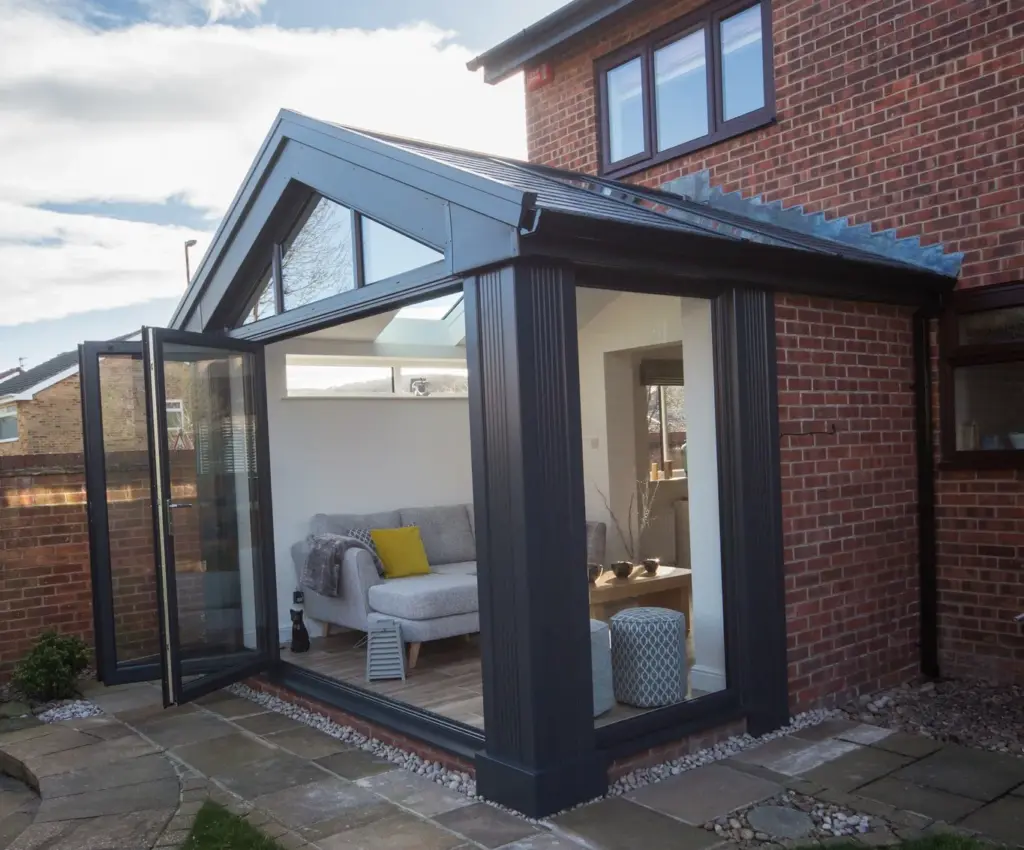

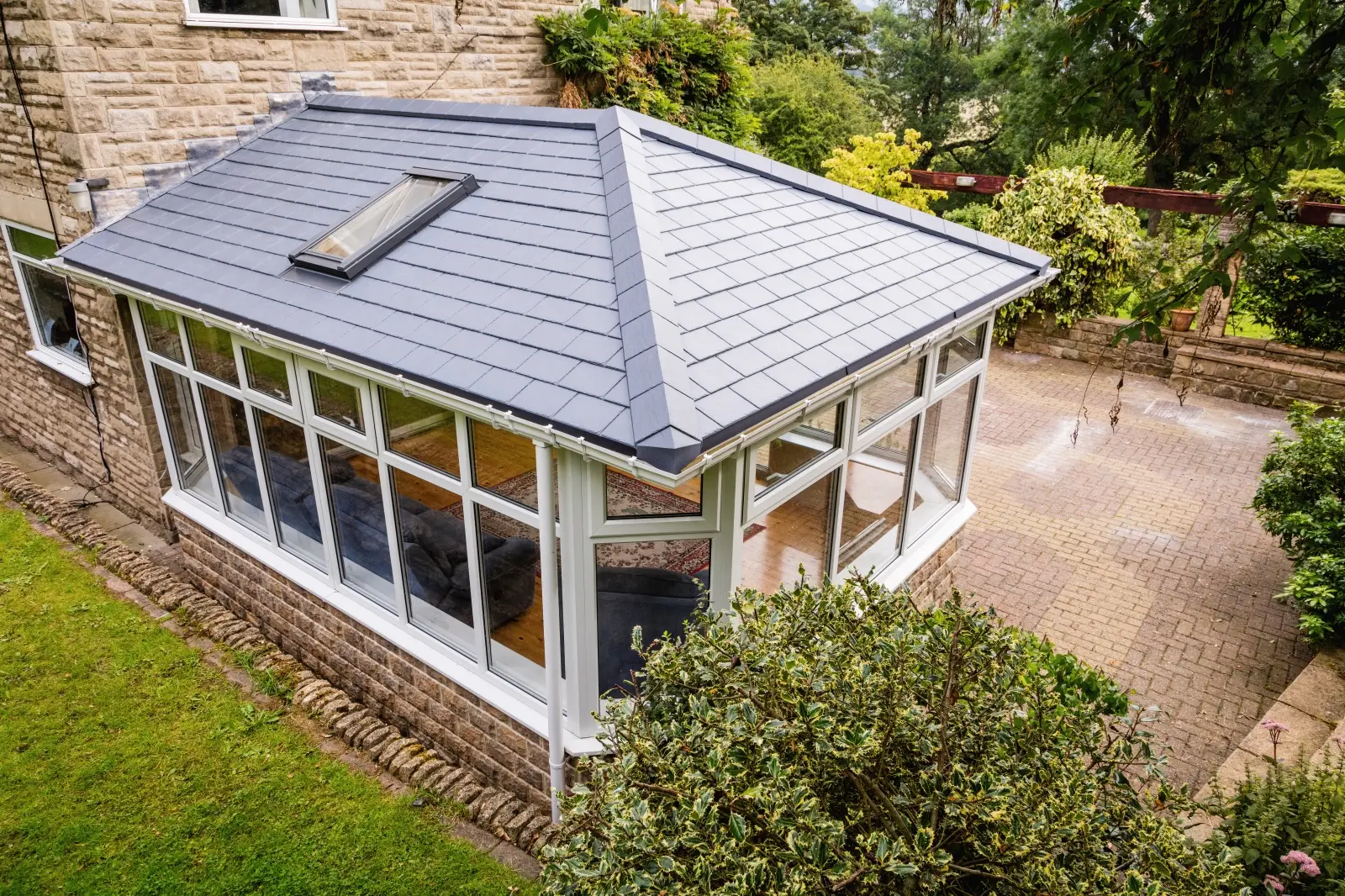
Extending your home with a conservatory is a big job, and requires a lot of planning and preparation. In this article we will go into the Scottish planning permission & building warrant system and break it down for you in a few simple steps. First of all it has to be said that understanding the system is not simple at all, but our specialists at Clyde Windows will support you throughout the process to make sure your conservatory is fully compliant with Scottish building standards & regulations.
Get help from our specialists
Book in for a free consultation with one of our garage conversion specialists, who’ll help you understand planning permission and building warrants, and advise whether your conversion requires either.
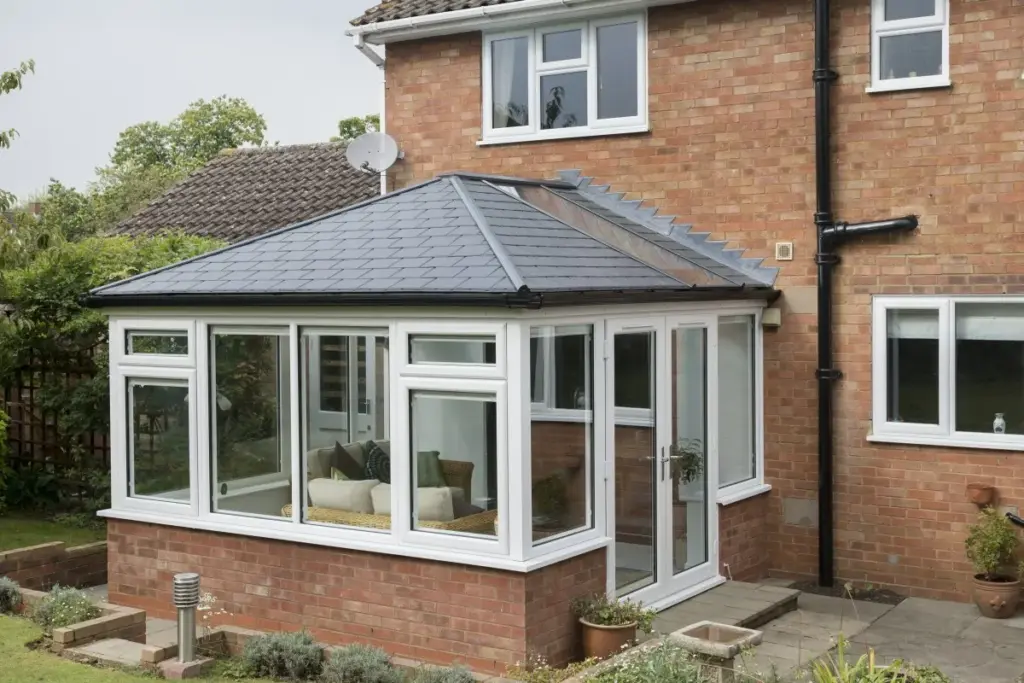
What is the difference between planning permission and building warrants?
Conservatory vs Extension – Understanding the Difference
Before you get caught up in the excitement of planning your new space, let’s address a question that could save you thousands of pounds and years of frustration: Do you actually want a conservatory, or would a different type of extension better suit your needs?
This isn’t a trivial question. Many homeowners discover too late that their conservatory is unbearably hot in summer, freezing in winter, and when they try to “fix” it by making alterations, they trigger extensive and expensive upgrade requirements.
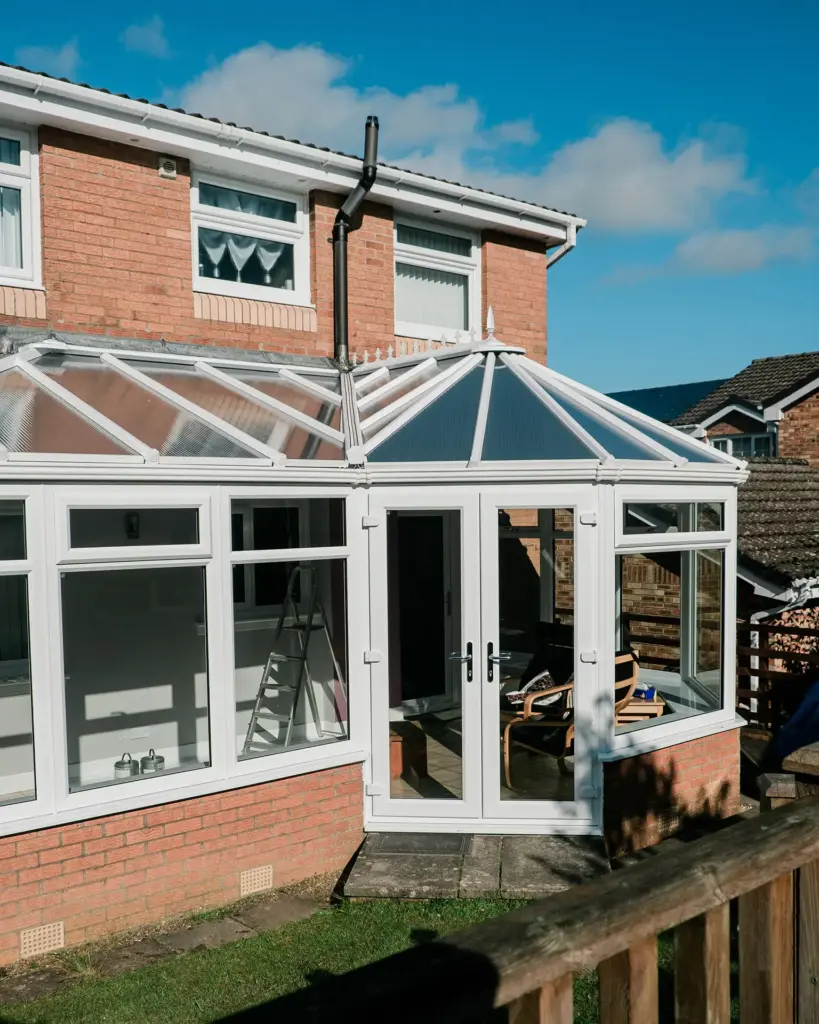
What Legally Defines a Conservatory in Scotland?
It is crucial to understand the difference between a conservatory & a home extension the Scottish Building Standards Handbook for Conservatories gives a clear definition what counts as a conservatory on page 3:
- Meet the definition of a conservatory ‘A conservatory means a building attached to a
dwelling with a door and any other building elements dividing it thermally from that dwelling and
having translucent glazing (including frames) forming not less than either:- 75% of its roof area and 50% of its external wall area
- 95% of its roof area and 35% of its external wall area.
- Be attached only to the ground storey of houses, but not flats or maisonettes, and only
when those houses have foundations of traditional concrete strips, or when the ground conditions
allow for the use of traditional strip foundations. - Have an internal floor area of more than 8 but not more than 20
- Be the correct distance from any boundary, by building:
- at least 1 m from any boundary; and
- at a distance from the boundary (in metres) of at least 1/6 of the area of glazing and frame (in ) facing that boundary. For example, if a side of the conservatory has an area of glass and frame of 9, then the conservatory must be at least, 9 ÷ 6 = 1.5 m from the boundary which that glazing faces.
- Have an effective roof area of not more than 35, which includes any roof area serving the house, drained via the conservatory gutters into a down pipe.
- Have a floor level the same as, or not more than 600
- Be fixed directly to a masonry wall at least 100 mm thick.
- Meet the thermal insulation requirements regardless of whether the conservatory is heated
or not. - Does not contain a chimney, flue pipe, fixed combustion appliance installation, washbasin, sink, bath, shower, urinal, watercloset or waterless closet.
- Is connected to the mains drainage system. The invert level of the house drainage system must not be more than 1000 mm from the point of connection.
- Is not built over:
- any form of underground drain, other than a drain only serving the dwelling over which the conservatory is to be built
- an existing rain water down pipe
- any existing escape windows.
- Is not built on or above any contaminated land.
When You Need Permission (And When You Don’t)
The 8m² Rule and Other Permission Triggers
So you’ve decided a conservatory is right for you. Before a single spade goes into the ground, you need to understand Scotland’s two-part permission system – and crucially, which one actually matters most for conservatories.
Here’s what confuses most homeowners: Planning Permission and Building Warrant are completely separate things. You might need one, both, or (rarely) neither. But here’s the critical point that trips people up:
Most conservatories DON’T need Planning Permission, but they DO need a Building Warrant.
Let’s break down both systems so you know exactly what applies to your project.
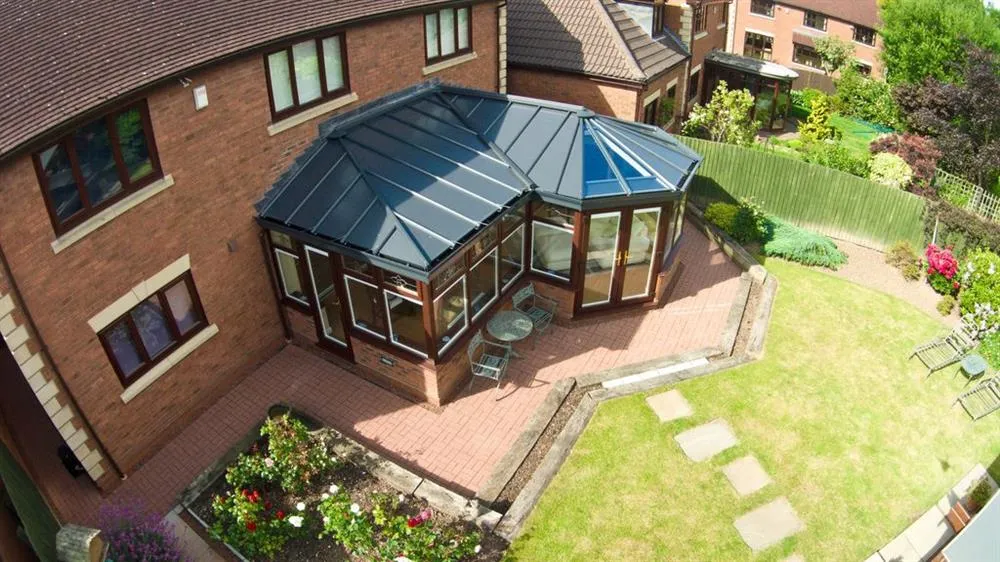
Planning Permission (not always needed)
Planning permission controls what you can build and where – it’s about the visual impact on your property and surroundings. The good news? Most conservatories fall under “permitted development rights” and don’t require planning permission.
When You DON’T Need Planning Permission
Your conservatory is likely “permitted development” if it meets ALL these criteria:
1. Size Limitations
Your conservatory doesn’t exceed:
- 24 square metres (about 5m x 5m), OR
- 20% of the total floor area of your house
Whichever is smaller applies
Example: If your house is 100m², 20% would be 20m², so that’s your limit (not 24m²)
2. Height Restrictions
For single-storey conservatories:
- Maximum 4 metres in height
- Maximum 3 metres to the eaves level
3. Depth Limits
The conservatory doesn’t extend beyond the rear wall of your original house by more than:
- 4 metres for detached houses
- 3 metres for semi-detached or terraced houses
4. Boundary Distance
The conservatory is built:
- At least 1 metre from any boundary
There’s also a more complex rule: it must be at a distance from the boundary (in metres) of at least 1/6 of the glazed area facing that boundary.
Example: If the side facing your neighbour has 12m² of glass, you need to be at least 12 ÷ 6 = 2 metres from the boundary
5. Coverage Limit
All additions (conservatory, shed, garage, etc.) don’t cover more than 50% of the land around your original house
6. Position
The conservatory is not forward of the front or side elevation that faces onto a road
When You WILL Need Planning Permission
You definitely need planning permission if:
1. Listed Buildings
Any alteration requires Listed Building Consent, including conservatories.
- Listed A and B properties: Referred to Historic Environment Scotland
- Listed C properties: Local Authority decision
- This applies even to small conservatories
2. Conservation Areas
Special restrictions apply – check with your local authority planning department.
3. Designated Areas
If you’re in:
- National Parks
- Areas of Outstanding Natural Beauty
- World Heritage Sites
More restrictive rules apply and permitted development rights may be limited.
4. Article 4 Direction
Some areas have Article 4 Directions that remove permitted development rights. Your local authority can confirm if this applies to your property.
4. Flats and Maisonettes
Different rules apply – you’ll likely need planning permission for any external alterations.
If you’re unsure whether any of the above apply to you, it’s best to contact your local council for guidance.
The “Original House” Calculation
Planning permission references your “original house” – this means the house as:
- First built, OR
- As it stood on 1 July 1948 (if built before this date)
Critical point: Any extensions built by previous owners count toward your 50% coverage limit.
Example:
- Original house footprint: 80m²
- Previous owner built garage: 15m²
- You want a conservatory: 18m²
- Total additions: 15m² + 18m² = 33m²
- 50% of original house: 40m²
- Result: Still within permitted development ✓
Getting a Certificate of Lawfulness
Even if you don’t need planning permission, it’s wise to get a Certificate of Lawfulness from your local planning department. Find Your local council here.
Why bother?
- Written proof you didn’t need planning permission
- Required by solicitors when you sell your property
- Relatively inexpensive and straightforward
- Prevents sale delays years later
Cost: Usually £100-£150
Timeline: 4-6 weeks typically
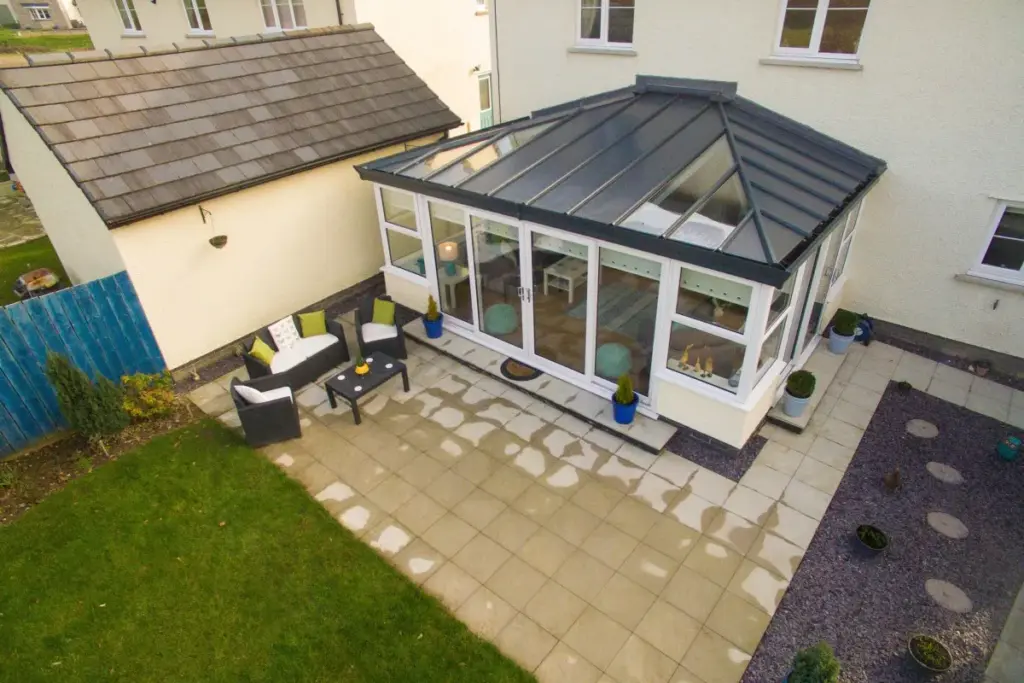
Building Warrant (The One Everyone Forgets)
Now we get to the critical part that catches out most homeowners. Even if you don’t need planning permission, you almost certainly need a Building Warrant.
This Is NOT Optional – It’s a Legal Requirement
Let’s be absolutely clear: Building Warrant is mandatory for most conservatories in Scotland. It’s not “nice to have” or “recommended” – it’s the law.
From the official Scottish Government guidance:
“Generally all new building work in Scotland to which the building regulations apply, must have a building warrant prior to work commencing.”
The 8m² Rule: When Building Warrant Is Required
You MUST get a Building Warrant if your conservatory:
1. Size Trigger
Has an internal floor area exceeding 8m² (roughly 3m x 2.7m)
That’s quite small – most conservatories people want are 12-20m², so Building Warrant applies to the vast majority.
2. Additional Triggers (Even Below 8m²)
You need a Building Warrant even for conservatories under 8m² if they contain:
- A chimney or flue pipe
- Fixed combustion appliance (stove, heater)
- Washbasin
- Sink
- Bath or shower
- Toilet (WC)
- Urinal
Or if they are:
- Within 1 metre of a boundary
What Building Warrant Actually Covers
Building Warrant isn’t just a form to fill in – it’s a comprehensive assessment that your conservatory meets Scottish Building Standards for:
1. Structural Safety (Standard 1.1)
- Foundations adequate for ground conditions
- Walls and roof can withstand wind and snow loads
- Proper connection to existing house
- Stability under all anticipated loads
2. Moisture Protection (Standard 3.10)
- Proper damp-proof courses and membranes
- Weathertight construction
- Prevention of water ingress
- Drainage of rainwater
3. Drainage (Standard 3.6)
- Connection to existing drainage system
- Proper falls and pipe sizing
- Access for maintenance
- Protection of existing drains
4. Thermal Performance (Standard 6.2)
- U-values for windows, roof, walls, floor
- Thermal separation from house
- Insulation specifications
- Limiting thermal bridging
5. Ventilation (Standard 3.14)
- Adequate background ventilation
- Opening windows/doors
- Trickle ventilators
6. Electrical Safety (Standard 4.5)
- Compliant electrical installation
- RCD protection
- Certification by competent person
7. Safety (Multiple Standards)
- Safety glazing where required
- Safe access (steps, barriers)
- Structural stability
8. Energy Efficiency (Standard 6.2)
- Overall energy performance
- Heating system requirements
Why Building Warrant Matters More Than Planning
Think of it this way:
Planning Permission = “Can I build this here?” (visual/planning policy)
Building Warrant = “Is this safe and compliant?” (technical/safety)
For conservatories, the technical requirements are complex and detailed. You’re not just adding a glass box – you’re:
- Excavating and pouring foundations
- Connecting to drainage systems
- Installing electrical systems
- Creating weathertight junctions with your house
- Ensuring structural stability
All of this must be verified and approved before work starts.
The Application Process
Step 1: Preparation (Before Applying)
You’ll need to gather:
- Detailed drawings (floor plan, elevations, sections)
- Specifications for all materials and construction methods
- UKAS certificates for conservatory system (structural compliance)
- Design checklist (the official guide provides this)
- Calculations (thermal performance, drainage, exposure zones)
- Site plan showing location relative to boundaries
Step 2: Submission
Applications go to your local authority building standards department (the “verifier”).
You can submit:
- Paper application (in person or by post)
- Online application (varies by local authority)
- Through your conservatory supplier (many offer this service)
Step 3: Fee Payment
Building Warrant fees are calculated based on the estimated cost of the work.
Typical fee range for conservatories:
- Small conservatory (£10k-£15k build): £300-£500
- Medium conservatory (£15k-£25k build): £500-£800
- Larger/complex conservatory: £800-£1,200+
Each local authority publishes their fee schedule, find your council website here.
Step 4: Assessment
The verifier reviews your application to ensure it meets building standards.
They may:
- Request additional information
- Ask for clarifications or amendments
- Request calculations or evidence
- Reject non-compliant proposals
This is why specialist help is valuable – experienced conservatory companies know what verifiers need and how to present it.
Step 5: Warrant Granted
If compliant, the verifier issues your Building Warrant.
This document authorizes you to proceed with construction.
Timeline: Plan for 6-8 Weeks
Typical timeline:
- Week 0: Submit application
- Weeks 1-2: Initial review by verifier
- Weeks 2-4: Requests for additional information (if needed)
- Weeks 4-8: Final review and decision
- Week 8: Building Warrant issued
Factors that speed it up:
- Complete application with all required information
- Using standard systems with UKAS certification
- Experienced supplier handling the application
- Straightforward site conditions
Factors that slow it down:
- Incomplete applications
- Non-standard designs
- Complex site conditions
- Custom specifications without certification
- Busy periods at local authority
Critical rule: You CANNOT start any work until the Building Warrant is granted.
During Construction: Inspections
Once you have your warrant, you don’t just build and forget – the verifier will carry out inspections:
Mandatory Inspection Points
- Foundation excavation (before concrete poured)
- Drainage installation (before backfilling)
- Structural installation (as required)
- Electrical installation (certification required)
- Completion (final inspection)
You must notify the verifier at each stage – don’t cover up work before inspection.
Completion Certificate: The Final Step
After final inspection and any required remedial work, the verifier issues a Completion Certificate.
This is crucial because:
- Confirms work meets building standards
- Required by mortgage lenders
- Essential for selling your property
- Proves compliance if issues arise later
Without a Completion Certificate:
- Solicitors will flag it during property sale
- You’ll need retrospective building warrant (expensive, not always possible)
- May need indemnity insurance
- Can delay or derail property sales
Quick Checklist
Is your property:
- Listed building? → YES, you need planning permission + Listed Building Consent
- In a conservation area? → PROBABLY, check with local authority
- Subject to Article 4 Direction? → PROBABLY, check with local authority
- A flat or maisonette? → PROBABLY, check with local authority
If none of above, does your conservatory:
- Exceed 24m² or 20% of original house (whichever is smaller)? → YES, you need planning permission
- Extend more than 4m (detached) or 3m (semi/terraced) from rear wall? → YES, you need planning permission
- Come within 1m of boundary? → CHECK – may need permission
- Take total coverage over 50% of original house grounds? → YES, you need planning permission
- Project forward of main house toward a road? → YES, you need planning permission
If you answered NO to all of the above: → You likely DON’T need planning permission (but get Certificate of Lawfulness for proof)
Building Warrant Decision Tree
Is your conservatory:
- Over 8m² internal floor area? → YES, you need Building Warrant
- Under 8m² BUT within 1m of boundary? → YES, you need Building Warrant
- Under 8m² BUT contains kitchen/bathroom/heating? → YES, you need Building Warrant
- Under 8m² AND over 1m from boundary AND no plumbing/heating? → NO Building Warrant needed (rare)
Reality: 95%+ of conservatories need Building Warrant.
Practical Next Steps
If You Need Planning Permission:
- Contact local authority planning department
- Discuss your proposal (pre-application advice often available)
- Prepare required drawings and documents
- Submit planning application with £202 fee
- Wait 6-8 weeks for decision
- Once granted, you have 3 years to implement
If You Need Building Warrant (Most People):
- Finalize design with conservatory supplier
- Gather UKAS certificates from supplier
- Prepare drawings and specifications
- Complete design checklist from Scottish Government guide
- Submit Building Warrant application to local authority
- Pay fee (based on project value)
- Wait 6-8 weeks for approval
- Only start work once warrant is granted
- Notify verifier at inspection points
- Obtain Completion Certificate at end
Get Help from professionals
While this might seem overwhelming at first it is recommended to get
Cost Summary
Planning Permission: £202 (if required)
Certificate of Lawfulness: £100-£150 (recommended even if not required)
Building Warrant: £300-£1,200+ depending on project value
Total permission costs: £400-£1,500 typically
Common Questions
Q: Can I apply for Building Warrant myself, or do I need a professional?
A: You can apply yourself, but it’s technically complex. Most homeowners use their conservatory supplier or hire a building warrant consultant. The application requires detailed knowledge of building standards, thermal calculations, structural certifications, and drainage design.
Q: How long does a Building Warrant last?
A: Three years from the date of grant. If you don’t start work within three years, you’ll need to apply again.
Q: What if I started work before getting Building Warrant?
A: Stop immediately. Contact your local authority building standards department. You may be able to apply retrospectively, but you risk enforcement action. Never continue work without a warrant.
Q: Can I get planning permission and Building Warrant at the same time?
A: You can apply for both simultaneously, but they’re separate processes with different departments. Some local authorities offer combined services.
Q: My neighbor built a conservatory without any permissions. Why should I bother?
A: Your neighbor may have gotten away with it so far, but problems emerge when they try to sell. Enforcement action can happen years later. More importantly, building standards exist for safety – non-compliant conservatories can have structural failures, drainage problems, or cause damage to the main house.
Conservatory Guide Resources:
- PDF guide: https://www.gov.scot/binaries/content/documents/govscot/publications/advice-and-guidance/2020/02/conservatories-guide-2nd-edition/documents/conservatories-guide-2nd-edition/conservatories-guide-2nd-edition/govscot%3Adocument/Conservatories%2BGuide%2B2nd%2Bedition%2B.pdf
- Government Website: https://www.gov.scot/publications/conservatories-guide-2nd-edition/