
Is your conservatory freezing in winter and unbearably hot in summer? You’re not alone. Many Scottish homeowners find their conservatories sit empty for much of the year, wasting valuable space.
The good news? Upgrading your conservatory roof can completely transform it into a comfortable year-round living area you’ll actually use.
There’s no one-size-fits-all solution. Your choice depends on your budget, how quickly you need the work done, your home’s architecture, and how you want to use the space.
This guide breaks down the five most popular options with honest pricing, realistic installation times, and advice on which suits different situations.
1. Equinox Tiled Roof System by Eurocell
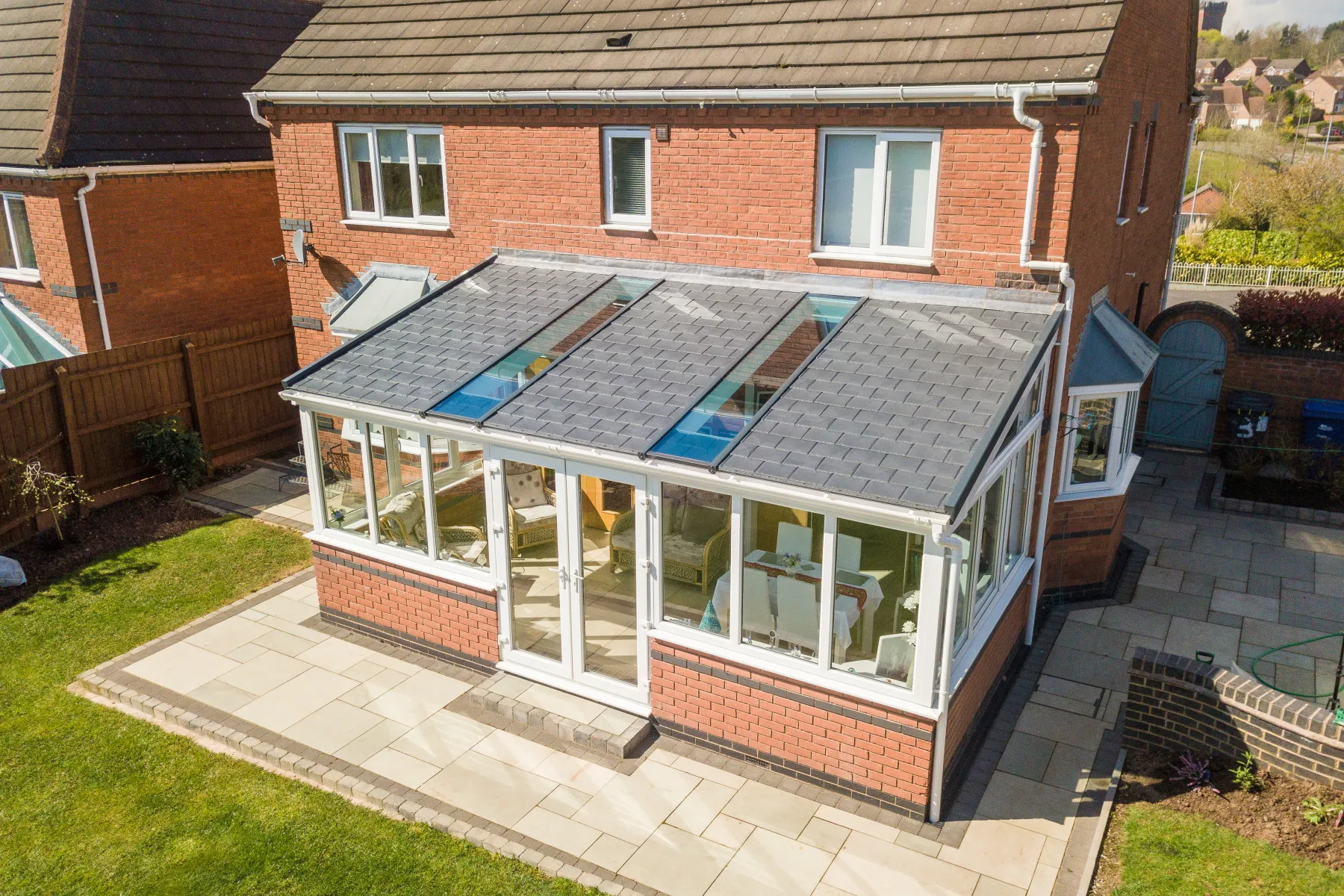
The Equinox system has become increasingly popular for homeowners who want their conservatory to look and feel like a proper room extension rather than a glass box.
Installation time: 2-4 days for most conservatories
Material cost: Mid-to-high range (typically £5,000-£15,000 depending on size)
Who can install it: Requires certified installers familiar with the system
What makes it special: Pre-fabricated panels speed up installation while maintaining high insulation standards
Why Choose This Option?
If you want a traditional tiled appearance that matches your existing roof but don’t want the lengthy installation of a full roof conversion, Equinox offers the best of both worlds. The system creates a plastered ceiling inside that looks just like any other room in your house, complete with integrated downlights if you want them.
The lightweight aluminium frame system means you get the solid roof benefits without the same structural concerns as traditional tiled conversions. The external tiles can be matched to your existing roof, so it looks like it’s always been part of your home.
Things to Consider
You’ll need to check whether your conservatory’s existing structure can handle the additional weight. Most modern conservatories can, but older ones (pre-2000) might need some reinforcement. It’s worth getting this assessed early in your planning.
While faster than full tiled conversions, you’ll still need building regulations approval, which adds a few weeks to the overall timeline from decision to completion.
2. Heat Reflective Polycarbonate Roofing
Often overlooked because of its budget-friendly reputation, modern heat-reflective polycarbonate is leagues ahead of the noisy, heat-trap versions from 20 years ago.
Installation time: 1-2 days (the quickest option)
Material cost: Most affordable (typically £2000-£6000)
Who can install it: Any competent roofer or builder
What makes it special: Dramatically reduces heat build-up while keeping installation costs low
Why Choose This Option?
If your main complaint is summer overheating and you’re working with a tighter budget, heat-reflective polycarbonate delivers excellent value. The technology has genuinely improved – modern 35mm multi-wall systems with heat-reflective coatings can reduce solar heat gain by up to 60% compared to standard clear polycarbonate.
The installation is straightforward, which keeps labour costs down. Because it’s lightweight, there are virtually no structural concerns. And if you’re handy, it’s one of the few conservatory roof options where DIY installation is actually feasible (though we’d still recommend professional fitting for warranty purposes).
Things to Consider
While vastly improved, polycarbonate won’t quite match the insulation of tiled or glass options. Your conservatory will still be cooler than the rest of your house in winter, though nowhere near as cold as it probably is now.
It’s also less likely to add significant property value compared to solid roof conversions. If you’re planning to sell within a few years, a tiled conversion might offer better return on investment.
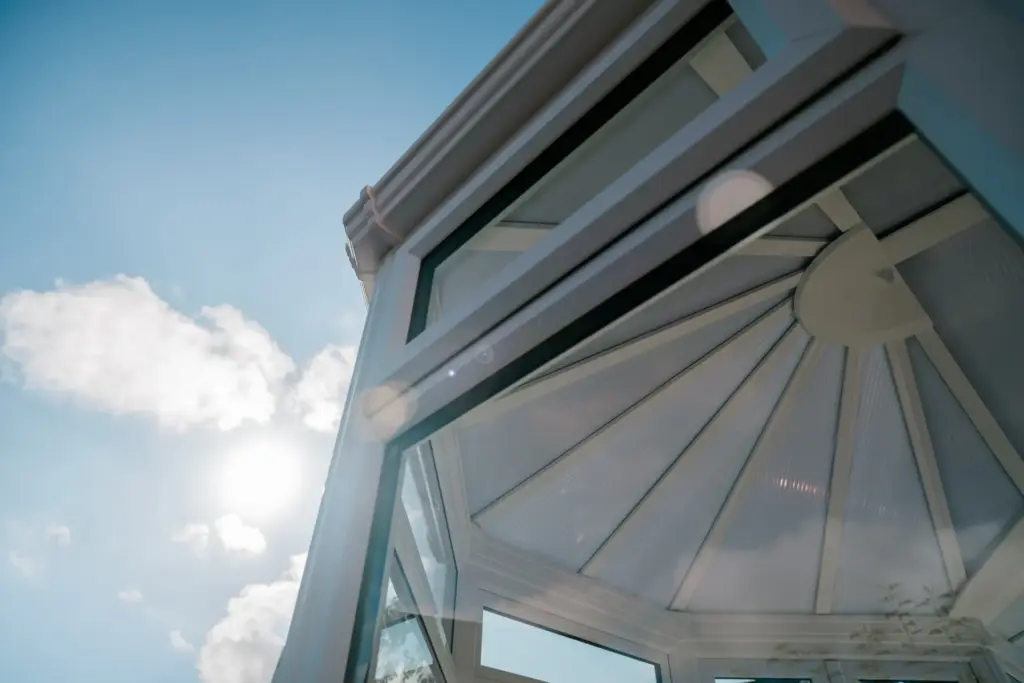
3. Traditional Tiled Conservatory Roof Conversion
This isn’t just a roof upgrade – this is converting your conservatory into a fully insulated house extension. If you’re looking to create a proper room rather than simply improve an existing conservatory, this is your option.
Installation time: 3-5 days installation (longer if structural work needed)
Material cost: Premium investment (typically £15,000-£35,000+)
Who can install it: Requires structural engineer sign-off and experienced installers
What makes it special: Transforms your conservatory into a genuine extension that adds significant property value
Why Choose This Option?
If you’re planning to use your conservatory as a dining room, home office, or even a bedroom, a full tiled conversion is essential. This is the only option that truly converts your conservatory from a glass room into a proper extension that feels like part of your house.
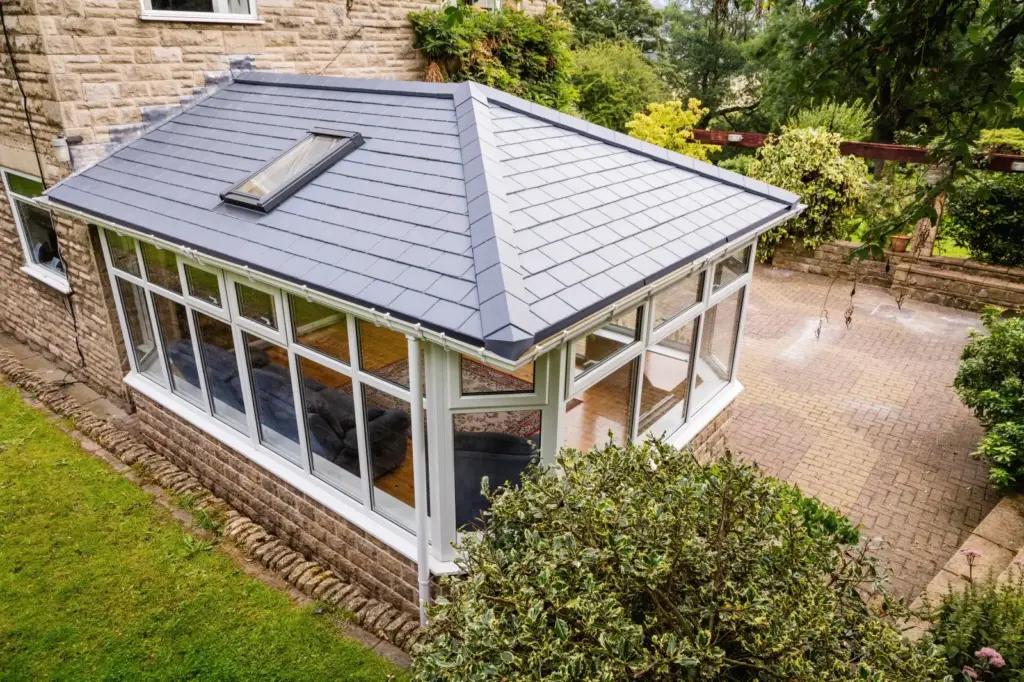
You get complete control over the specification: match tiles to your existing roof (slate, concrete, or clay), position Velux windows exactly where you want natural light, and create a proper plastered ceiling with integrated lighting and even speakers if you want.
The insulation standards match modern building regulations, meaning your converted space becomes a proper heated room rather than a conservatory you need to close off in winter. Many homeowners report their heating bills actually drop because they’re heating one well-insulated room instead of fighting heat loss through a glass roof.
This is the choice for homeowners who’ve realized they don’t actually want a conservatory anymore – they want an extension. Rather than demolishing and rebuilding, you’re using the existing structure and transforming it into something fundamentally different.
Things to Consider
Because this is technically converting a conservatory into an extension, it requires building regulations approval. This adds paperwork and inspection stages to the project, but any reputable installer will handle this for you as part of the service.
The existing conservatory base and walls may need reinforcing to handle the additional weight of a tiled roof. Older conservatories (pre-2000) almost certainly will need some structural work. Factor in 4-6 weeks total from initial survey to completion, including structural assessments and building control inspections.
Budget-wise, this is the most expensive option upfront, but it also adds the most value to your property – often £8,000-£15,000 in added value for a £6,000-£10,000 investment. You’re not just upgrading a conservatory; you’re creating valuable living space.
Think of this option as choosing between renovating what you have versus creating something new. If your goal is a proper extension rather than an improved conservatory, the tiled conversion delivers exactly that.
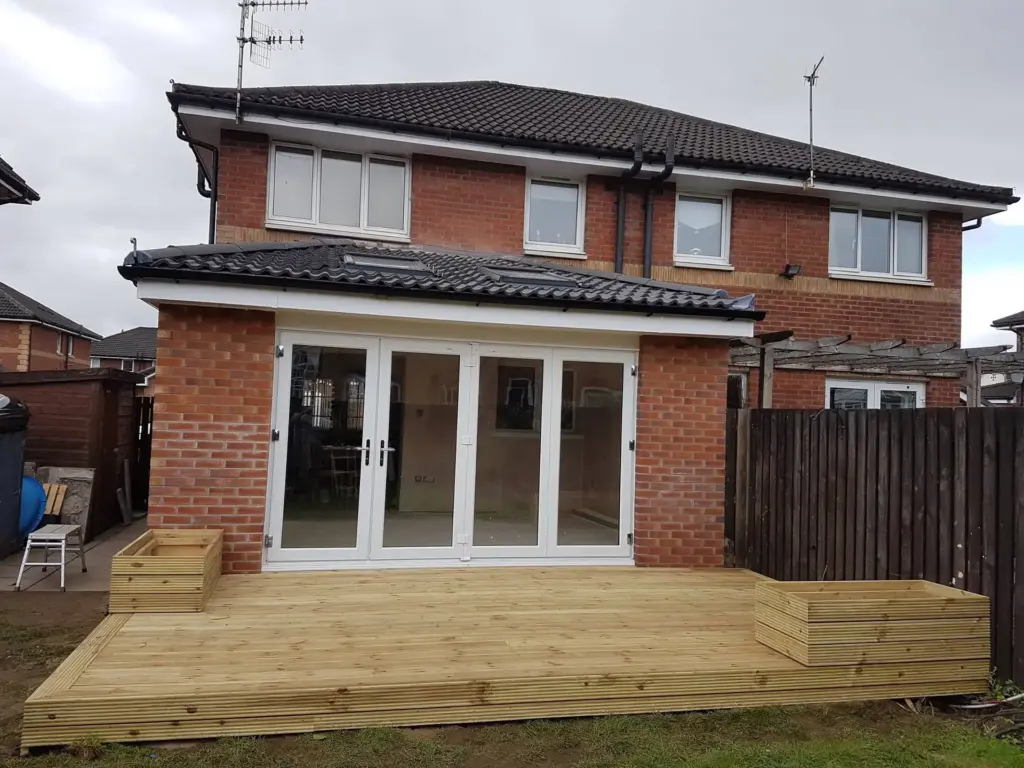
4. Performance Glass Roof Systems
For those who love the light and airy feel of a glass conservatory but hate the temperature extremes, modern performance glass roofs are genuinely impressive.
Installation time: 2-3 days
Material cost: Premium pricing (typically £8,000-£15,000)
Who can install it: Specialist glazing installers required
What makes it special: Self-cleaning coatings and solar control technology keep temperatures comfortable
Why Choose This Option?
If natural light is non-negotiable but you need better thermal performance, performance glass delivers both. Modern systems use low-emissivity coatings that reflect heat in summer and retain warmth in winter, while self-cleaning glass stays clearer for longer.
The difference between old conservatory glass and modern performance glass is remarkable. Blue-tinted solar control glass can reduce solar heat gain by 70-80% while still letting in plenty of natural light. In winter, the low-E coatings work in reverse, keeping heat inside.
Aesthetically, glass roofs maintain that bright, open feeling that makes conservatories special. If you’ve always loved having a glass conservatory but just want it to work better, this is your option.
Things to Consider
Even the best glass roofs won’t match solid roofs for insulation, so your heating costs will be slightly higher than tiled options. You’re paying for natural light and views – if those aren’t priorities, a solid roof makes more financial sense.
Glass roofs also need to be professionally cleaned occasionally, though self-cleaning coatings reduce this significantly. Budget for cleaning every 1-2 years rather than the constant maintenance old conservatory roofs needed.
The initial cost is high, and unlike tiled conversions, glass roof upgrades don’t typically add equivalent property value. You’re investing in lifestyle improvement rather than financial return.
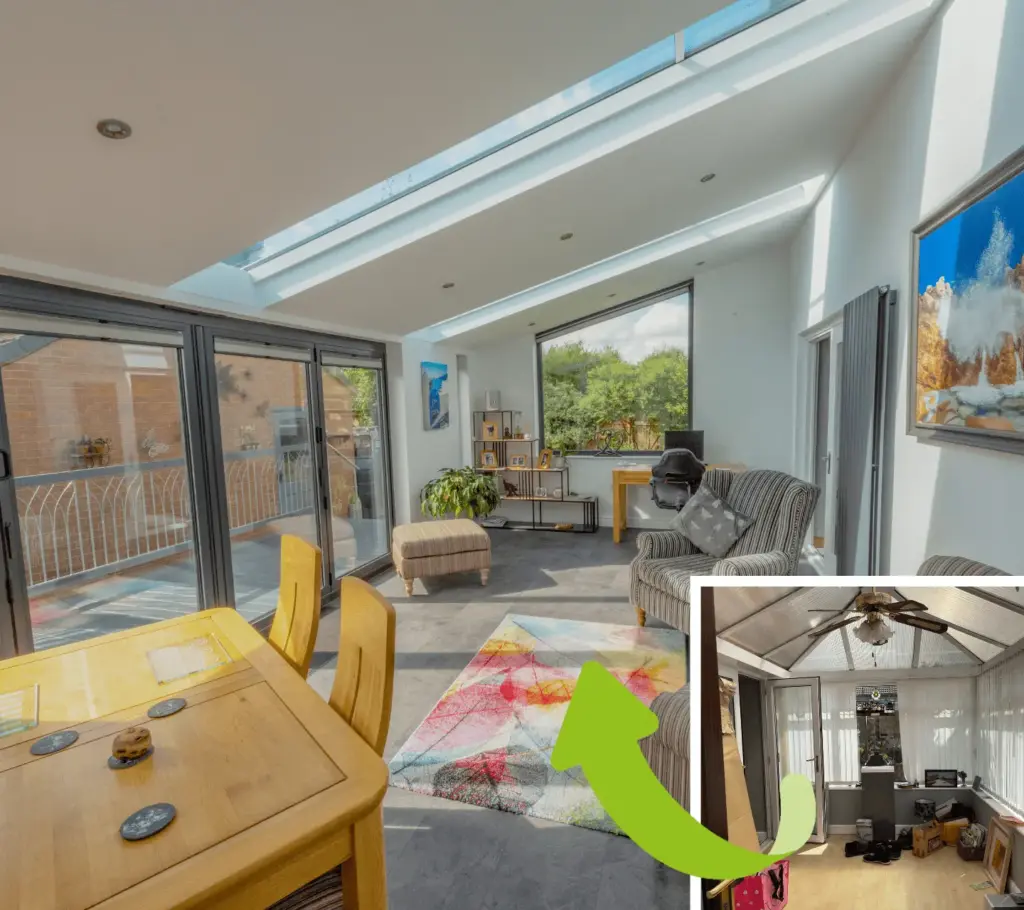
5. Ultraframe Hup Solution
The Hup system is a clever innovation that bridges the gap between budget polycarbonate and premium tiled roofs.
Installation time: 1-2 days
Material cost: Mid-range (typically £3,000-£6,000)
Who can install it: Here’s the key advantage – less specialized builders can fit it
What makes it special: Modular design allows bespoke solutions without premium installation costs
Why Choose This Option?
The Hup system’s main advantage is flexibility combined with affordability. Because it uses a modular design with standardized components, it’s significantly easier to install than traditional bespoke systems. This means you can use a wider range of builders rather than needing highly specialized conservatory roof installers, which keeps labour costs reasonable.
You still get a tailored solution – the system can accommodate different conservatory shapes and sizes, and you can choose from various cladding and glazing options. But the underlying structure is simplified, which speeds up installation and reduces costs.
It’s particularly good for retrofit situations where your existing conservatory is structurally sound but you want better thermal performance. The lightweight design means minimal structural concerns, and because installation is straightforward, you won’t need the same level of specialist expertise that other solid roof systems require.
The Hup system delivers solid roof benefits – better insulation than glass or polycarbonate, a plastered ceiling inside, and a weatherproof tiled or composite exterior – but at a more accessible price point and with faster installation than premium alternatives.
Things to Consider
While versatile, the Hup system may have fewer finish options than fully bespoke tiled conversions. That said, for most homeowners, the choices available are more than sufficient – you can still match external cladding to your house and choose internal ceiling finishes.
The system is relatively new compared to established options like Equinox or traditional conversions, so long-term performance data is more limited. However, the Ultraframe brand has an excellent reputation in the conservatory industry, with decades of experience manufacturing conservatory components.
Because the system is designed for ease of installation, it’s an excellent choice if you need your conservatory upgraded quickly or if you’re working with a builder who’s experienced but not a conservatory specialist. The modular approach removes much of the complexity while still delivering professional results.
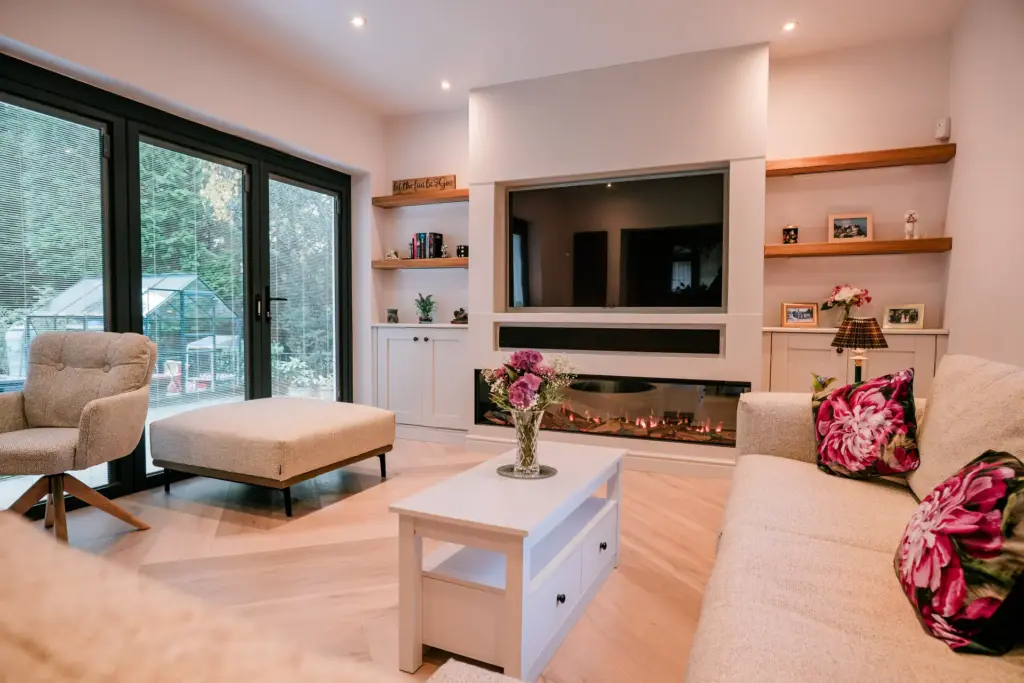
Which Conservatory Roof Option Suits Your Needs?
| Your Priority | Best Option | Why |
|---|---|---|
| Fastest installation | Polycarbonate or Hup | 1-2 days vs 3-5 days for other options |
| Tightest budget | Polycarbonate | Half the cost of premium alternatives |
| Adding property value | Tiled conversion | Creates habitable living space that buyers value |
| Maximum natural light | Performance glass | Best light transmission with modern thermal control |
| Balanced cost/performance | Hup or Equinox | Good insulation without premium pricing |
| Converting to proper room | Tiled conversion or Equinox | Both create plastered ceiling and room-like feel |
| Quick upgrade, tight budget | Hup system | Faster than Equinox, better than polycarbonate |
What Else Should You Think About?
Planning Permission
Most conservatory roof replacements fall under permitted development, meaning you won’t need planning permission. The key criteria are:
- The roof height doesn’t exceed the original conservatory
- You’re not changing the external footprint
- The property isn’t in a conservation area or listed
However, if you live in a conservation area, listed building, or flat, you’ll likely need approval. Always check with your local planning authority or have your installer verify this during the consultation.
Building Regulations
Solid roof conversions (tiled, Equinox, or Hup systems with solid panels) require building regulations sign-off to ensure:
- The structure can safely support the new roof weight
- Thermal performance meets current standards (U-values)
- Any electrical work complies with Part P regulations
This sounds daunting but it’s straightforward – your installer should handle all the paperwork, arrange the structural calculations, and coordinate inspections. You’ll need to pay the building control fee (typically £300-£500), but this gives you peace of mind that the work is safe and compliant.
Glass and polycarbonate replacements often don’t require building regulations approval if you’re replacing like-for-like, but always confirm with your installer.
Your Existing Structure
Not all conservatories can support all roof types without modification. Key considerations:
Age of conservatory:
- Pre-2000: Often need base reinforcement for solid roofs
- 2000-2010: Usually fine for lightweight systems (Equinox, Hup, polycarbonate)
- Post-2010: Generally suitable for all options including full tiled conversions
Conservatory style:
- Victorian/Edwardian with curved eaves: May need custom solutions
- Lean-to: Simplest to upgrade, compatible with all systems
- P-shaped or T-shaped: More complex, may require multiple roof types
Foundation quality:
- Brick/block dwarf walls on concrete foundations: Usually sufficient
- UPVC base walls: May need reinforcement for heavier roofs
- Older timber bases: Almost certainly need upgrading
A proper survey will identify any structural concerns early, so there are no expensive surprises later.
Scottish Weather Considerations
Living in Scotland means dealing with significant rainfall, occasional snow loads, and long, dark winters. This actually influences which roof type makes most sense:
Rain noise: Solid roofs (tiled, Equinox, Hup) are virtually silent in rain. Glass is quieter than old conservatory roofs but you’ll still hear heavy downpours. Polycarbonate has improved massively but remains the noisiest option.
Snow loads: Scottish building regulations require higher snow loading calculations than England. Tiled conversions easily handle this, but older conservatories might need strengthening for heavier roof options.
Winter insulation: Our long, dark winters mean insulation matters more than southern England. Solid roofs significantly outperform glass for retaining heat, potentially saving hundreds on heating costs annually.
Summer overheating: Ironically less of an issue in Scotland than people think, but still worth addressing. Even on rare hot days, modern solar control glass or reflective polycarbonate makes a massive difference.
Making the Right Choice for Your Home
After helping countless Scottish homeowners upgrade their conservatory roofs, here’s what we’ve learned about making the right choice:
If You Want a Proper Room Extension
Go for a tiled conversion. Yes, it’s the most expensive option, but you’re creating genuinely habitable space. If you’re planning to use the conservatory as an office, playroom, or extra bedroom, the investment makes sense. The improved insulation and room-like ceiling make it feel like part of your house rather than an add-on.
If Budget Is Your Main Concern
Heat-reflective polycarbonate delivers remarkable value. While it won’t transform your conservatory into a year-round room, it’ll make summer vastly more comfortable and provide some winter improvement. For £2,000-3,000, that’s excellent return on investment.
If You Want the Best of Both Worlds
The Equinox or Hup systems sit perfectly in the middle ground. You get the solid roof benefits (insulation, silence, room-like ceiling) at 60-70% of the cost of a full tiled conversion. Installation is quicker, and the systems are specifically designed for conservatory retrofitting.
If You Can’t Bear to Lose Natural Light
Performance glass roofs let you keep the bright, airy feel while solving the temperature problems. They’re expensive and won’t match solid roofs for insulation, but if natural light is what you love about your conservatory, it’s worth paying extra to keep it while improving comfort.
The Honest Truth About Property Value
Only tiled conversions reliably add more value than they cost – often £8,000-£15,000 of value for £6,000-£10,000 investment. Other options improve your quality of life and make your home more saleable, but shouldn’t be viewed as pure financial investments.
If you’re planning to sell within 2-3 years, a tiled conversion makes financial sense. If you’re staying put for 5+ years, choose whichever option makes your home more enjoyable to live in.
Next Steps: Getting Your Conservatory Roof Upgraded
1. Get a Proper Survey
Free consultations from reputable installers should include:
- Detailed measurements of your conservatory
- Assessment of existing structure and any reinforcement needed
- Discussion of how you want to use the space
- Samples of roofing materials
- Detailed written quote with itemized costs
- Timeline from order to completion
Be wary of installers who quote without visiting your property or who pressure you into immediate decisions.
2. Get Multiple Quotes
For significant investments like tiled conversions, get 2-3 quotes. Look for:
- Similar specifications so you’re comparing like-for-like
- Detailed breakdown of materials vs labor costs
- Clear information about building regulations and who handles it
- Warranties on materials and workmanship
- References from recent local projects
The cheapest quote often isn’t the best value – experience and quality matter enormously with conservatory roof installations.
3. Check Credentials
Ask installers about:
- How many conservatory roofs they’ve installed in the last year
- Whether they’re certified for the specific system (Equinox, Ultraframe, etc.)
- Their process for building regulations and structural calculations
- What warranties they offer and what they cover
- Trade association membership (DGCOS, Certass, FENSA)
4. Plan for Disruption
Even quick installations mean:
- No access to your conservatory for 1-5 days
- Builders working on your roof (noise and activity)
- Potential mess in your garden from old roof removal
- A building control inspection (for solid roof conversions)
Good installers minimize disruption, protect your property, and clean up thoroughly. Ask about their working practices during the consultation.
5. Think Long-Term
A conservatory roof should last 20-30 years with minimal maintenance. Consider:
- Will your needs change? (growing family, working from home, aging in place)
- What maintenance will be required?
- How will it affect your heating costs?
- Does the warranty cover what matters?
Spending an extra £1,000-2,000 for a significantly better solution often makes sense when viewed over decades of use.
Your conservatory should be one of your favorite spaces, not a room you avoid for half the year. The right roof upgrade can genuinely transform how you use your home, but only if you choose the option that fits your specific needs, budget, and property.
There’s no universally “best” choice – a tiled conversion is overkill if you’re happy with a slightly cooler space and want to save money. Equally, polycarbonate is false economy if you’re trying to create a proper home office.
Take time to think about how you actually want to use the space, get proper surveys from experienced installers, and choose the option that balances your priorities. Whether you invest £2,000 or £10,000, a well-chosen conservatory roof upgrade will improve your home’s comfort and usability for decades to come.
Ready to explore your options? Look for experienced conservatory roof specialists in your area who offer free, no-obligation surveys. The best ones will honestly discuss which option suits your situation rather than pushing their highest-margin product.
Your conservatory has enormous potential – the right roof upgrade will finally unlock it.