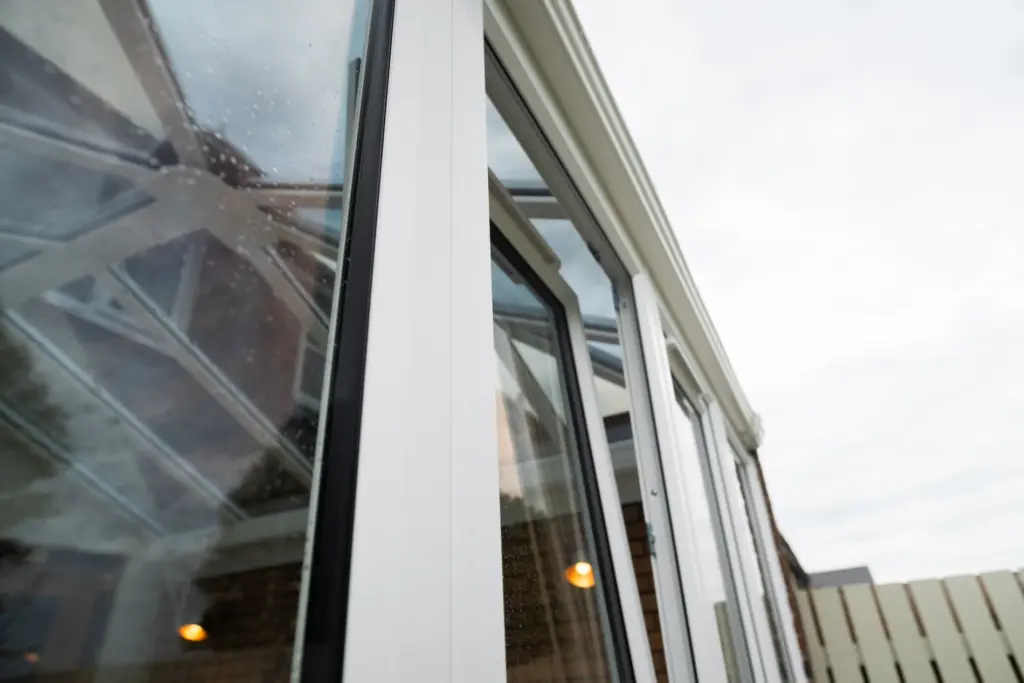

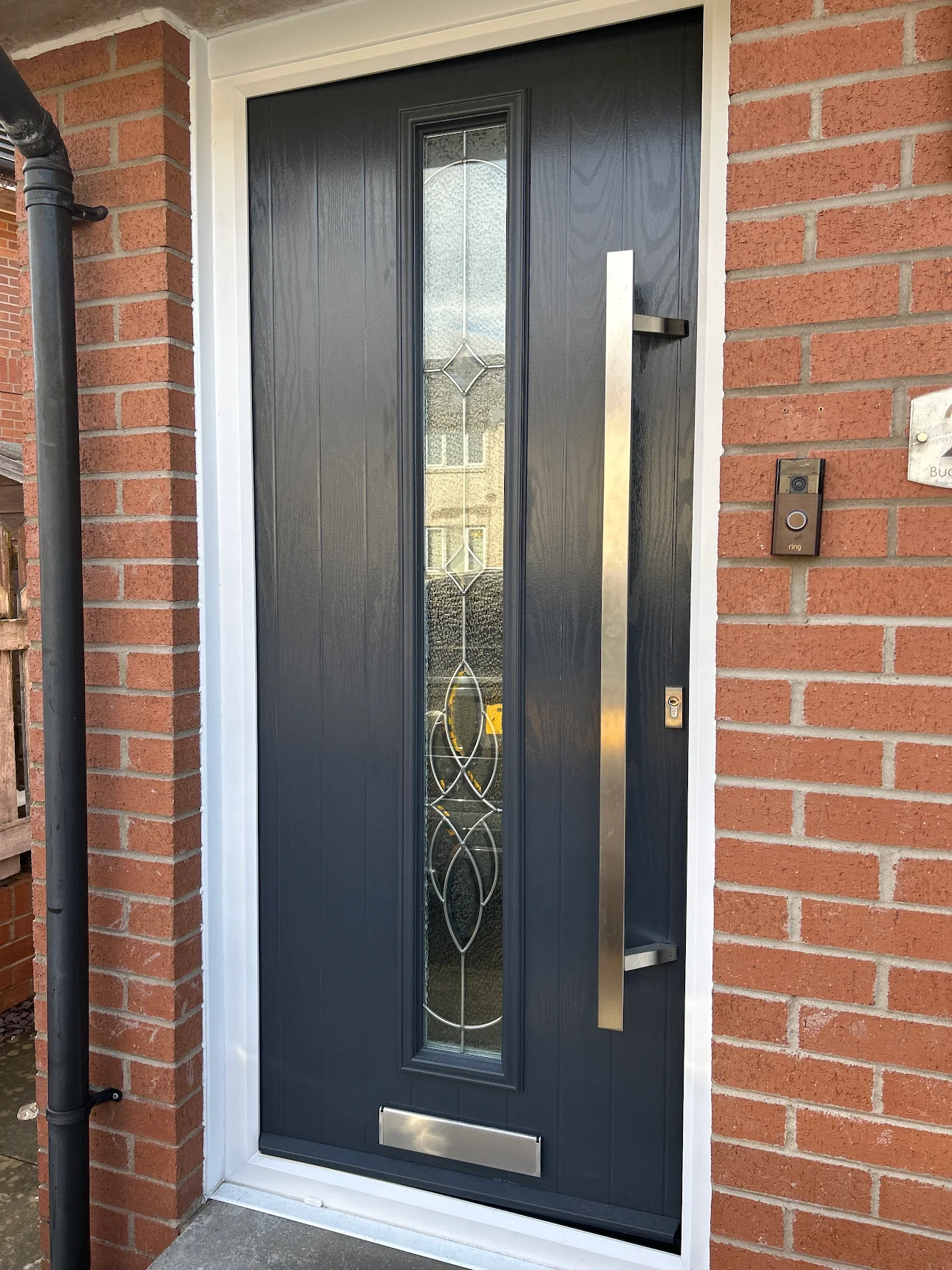
Composite doors are low maintenance, but regular cleaning and a few simple checks help preserve the finish, weather seals and locking hardware. Wash the door with mild soapy water, keep the threshold and drainage routes clear, engage the multipoint lock correctly, and use only lubricants approved for the fitted hardware.
A useful routine is to clean the door every three to four months and inspect the hinges, seals, handles and lock at least twice a year. Increase the frequency in exposed coastal locations or anywhere salt, grit or traffic film accumulates quickly.
You can also download our composite door care guide (PDF) for supplementary cleaning and maintenance instructions.
Composite door maintenance schedule
| Task | Suggested frequency | What to check |
|---|---|---|
| Clean the door slab, frame and glass | Every 3–4 months | Dirt, salt and residue around edges, glazing and furniture. |
| Clean the threshold and drainage openings | During routine cleaning | Leaves, grit or debris that could hold water. |
| Inspect weather seals | Twice a year | Cracks, gaps, flattening or sections pulled from position. |
| Check hinges and fixings | Twice a year | Loose screws, movement, rubbing or a change in door alignment. |
| Clean lock faces and keeps | Twice a year | Grit, corrosion and wear at the points where moving parts meet. |
| Check the key cylinder | Twice a year or when operation changes | A dirty key, stiffness or difficulty inserting and turning the key. |
This is a general homeowner schedule. The instructions supplied with the door, lock cylinder and multipoint mechanism take priority. The GGF’s window and door good-practice guide also treats cleaning, seals and hardware as separate maintenance tasks because each component has different requirements.
How to clean a composite door
Remove loose dust with a soft cloth, then wash the slab and frame using warm water and a little mild washing-up liquid. Work from the top down with a clean, non-abrasive cloth. Rinse with clean water and dry the surfaces, paying attention to corners and the lower edge.
Use a soft lint-free cloth and a suitable household glass cleaner on glazed panels. Keep cleaner away from the lock cylinder and do not allow liquid to run into hardware openings. Decorative glass, coloured films or specialist coatings may have separate instructions.
| Use for routine care | Avoid |
|---|---|
| Warm water and mild detergent | Bleach, ammonia, acids and harsh solvents |
| Soft microfibre or colourfast cloth | Scouring pads, wire wool and abrasive powders |
| Clean water for rinsing | Pressure washers aimed at seals, glazing or joints |
| Product approved for the particular hardware finish | Metal polish on coated, plated or lacquered furniture unless approved |
| Gentle hand pressure | Blades or scrapers on the slab, frame or glass |
Clean the frame, threshold and drainage paths
Open the door and vacuum loose grit from the threshold, frame rebate and corners. Wipe these areas with a damp cloth and clear any visible drainage openings with a soft brush or a thin wooden or plastic tool. Do not enlarge drainage holes or push sharp metal objects into the frame.
Check that external outlets remain open and that water is not being trapped by soil, paving, mats or debris near the threshold. Persistent water ingress needs investigation; adding sealant or drilling the frame without understanding the drainage design can make the problem worse.
Look after gaskets and weather seals
Clean rubber seals with mild soapy water and inspect them for splits, flattening or gaps. Do not pull at a gasket or apply petroleum jelly, oil or household chemicals unless the door manufacturer specifically recommends them.
If a seal has moved slightly, it may be possible to ease it back into its groove without stretching it. A damaged or badly distorted gasket should be replaced with the correct profile by the installer or a competent repairer.
How to use the multipoint lock correctly
When closing the door, bring the slab fully into the frame and lift the handle so the hooks, rollers or bolts engage before turning the key or thumb-turn. This helps the door seal evenly and ensures the locking points are doing their job. Do not use the key to pull the door into alignment or force a handle that will not lift normally.
| Part | Routine care | Important caution |
|---|---|---|
| Lock face and keeps | Wipe clean and remove grit from contact areas. | Do not coat the entire mechanism with spray lubricant. |
| Hooks, bolts and rollers | Use only the grease or lubricant specified by the lock manufacturer. | Keep lubricant off the slab, frame and seals. |
| Key cylinder | Keep keys clean and use the cylinder maker’s approved lock spray when required. | Do not assume oil, grease, graphite or a general-purpose spray is compatible. |
| Handle and escutcheon | Wipe with a soft damp cloth and dry. | Avoid abrasive metal polish on coated finishes. |
| Fixings | Visually check for looseness. | Have security-critical or stripped fixings corrected professionally. |
Lock-cylinder requirements vary, so there is no universal lubricant that is right for every cylinder. Current industry guidance on lock cylinders says cylinders should be checked and maintained in line with the manufacturer’s instructions. Identify the fitted cylinder before applying any product.
Hinges, alignment and adjustment
Check hinges for dirt, loose fixings and signs that the door is dropping or rubbing. Clean accessible surfaces and apply only the lubricant recommended for the hinge. Do not loosen hinge adjustment screws simply to see what they do.
A composite door is heavy, and its hinges may provide adjustment in several directions. Incorrect adjustment can reduce compression, strain the lock or leave the door insecure. If the slab catches, the gaps around it look uneven, or the lock only works when the door is lifted, ask the installer to assess it.
What to check when a composite door is draughty
First confirm that the handle has been lifted and every locking point is engaged. Then inspect the seals for dirt, gaps or damage and check whether the slab sits evenly in the frame. A mat, stone or grit at the threshold can also prevent full closure.
Do not increase compression blindly. Too much pressure can make the handle stiff and overload the mechanism. Persistent draughts may require hinge, keep or roller adjustment using the correct hardware instructions.
Troubleshooting common composite door problems
| Problem | Safe first check | When to contact the installer |
|---|---|---|
| Handle will not lift | Open the door, inspect for debris and test whether the mechanism moves without forcing it. | If it remains stiff, grinds or only works when the slab is pushed or lifted. |
| Key is difficult to turn | Try a clean spare key and make sure the handle is fully lifted. | If the cylinder binds, the key is damaged or the lock remains under pressure. |
| Door rubs the frame | Check for debris and note the exact contact point. | If gaps are uneven or the heavy slab appears to have dropped. |
| Draught around the edge | Engage all locking points and inspect the gasket. | If the seal is damaged or compression remains uneven. |
| Water at the threshold | Clear visible drainage paths and remove obstructions outside. | If water enters the home or persists after cleaning. |
| Loose handle or hinge | Stop forcing the component. | Arrange prompt repair where security, alignment or fixing strength is affected. |
Security and professional repairs
Locks, cylinders, keeps and hinges are part of the complete security system. The Door & Hardware Federation explains that a PAS 24-rated door is assessed as a complete assembly rather than as one isolated component in its door-security guidance for homeowners. Use compatible replacement parts and avoid modifications that could weaken the tested arrangement.
If Clyde Windows installed your door and it has become difficult to lock, draughty or misaligned, contact us with photographs and installation details. Do not dismantle the multipoint mechanism or hinges as routine DIY maintenance. For comparable advice on cleaning PVC-U frames, seals and glazing, see our uPVC window care guide.
Keep your composite door working properly
Gentle cleaning, clear drainage, clean keys and correct lock operation prevent many avoidable problems. Respond early if the door begins to rub or the handle becomes stiff, and use product-specific lubricants instead of guessing.
To explore replacement styles, colours and glazing options, visit our composite door installation service. You can also browse our wider front and back door range.
Frequently asked questions
How often should I clean a composite door?
Every three to four months is a sensible general schedule. Clean more often in exposed coastal or polluted areas, and inspect the lock, hinges and weather seals at least twice a year.
Can I use WD-40 in a composite door lock?
Do not use a general-purpose spray unless the manufacturer of the exact cylinder or multipoint lock approves it. Cylinders and locking mechanisms can require different products, so identify the hardware and follow its care instructions.
Why do I need to lift the handle before locking?
Lifting the handle engages the multipoint hooks, rollers or bolts around the door. The key or thumb-turn then secures that mechanism. Skipping this step can leave locking points disengaged.