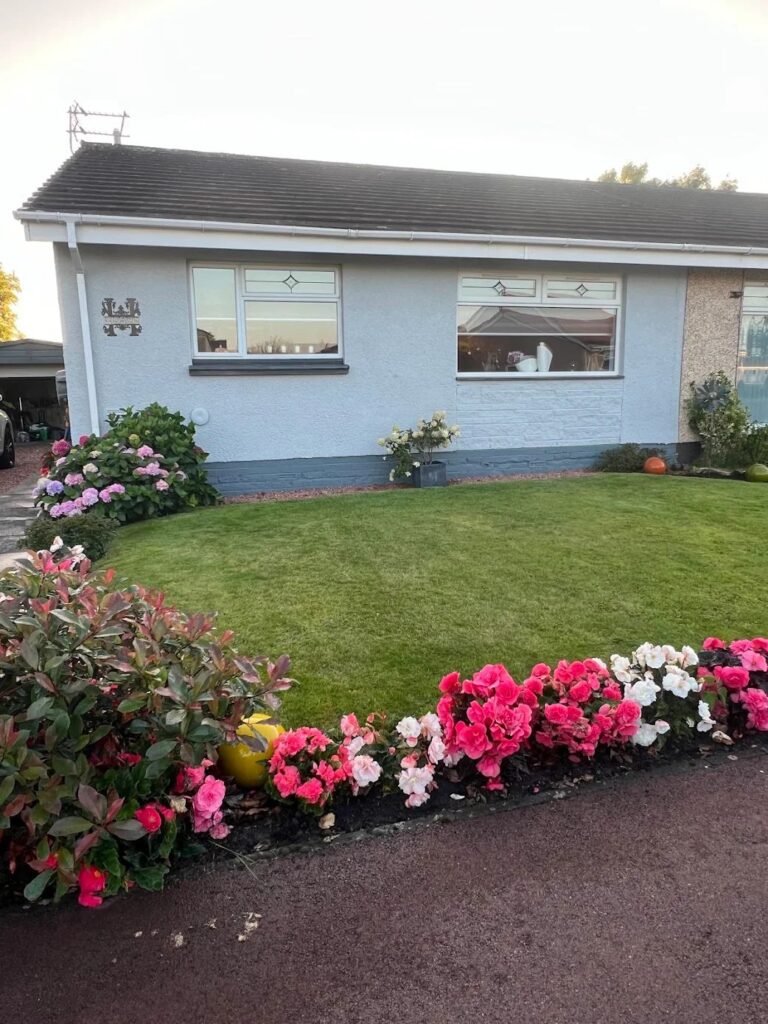

Introduction
Whether your family has outgrown your home, you’re now working remotely, or you’re simply looking for more living space without the expense of moving house, a garage conversion could be one of the smartest investments you make.
By the end of this guide, you’ll understand:
- Whether a garage conversion is the right option for your home.
- How much a garage conversion typically costs in Scotland.
- What should be included within a professional quotation.
- When a Building Warrant is required.
- The differences between garage conversions and extensions.
- Common mistakes homeowners make when choosing a contractor.
- The step-by-step process from initial consultation through to completion.
Prefer to talk it through? Call us on 01698 888228 or request a free callback and one of our team will explain the options in plain English and answer any questions you have.
Across Scotland, more homeowners than ever are choosing to convert unused garages into warm, comfortable living spaces that become a natural extension of their home. From home offices and family rooms to additional bedrooms, gyms and playrooms, garage conversions offer an affordable way to gain valuable space without sacrificing your garden or committing to the cost and disruption of a full extension.
Yet despite their growing popularity, garage conversions remain one of the most misunderstood home improvements.
Search online and you’ll find prices ranging from £8,000 to more than £40,000. Some companies advertise “garage conversions from…” prices that seem almost too good to be true, while others provide little explanation of what’s actually included.
The reality is that no two garage conversions are the same.
The size of the garage, the intended use of the room, the condition of the existing structure, the level of insulation required and whether structural alterations are needed can all have a significant impact on the final cost and construction process.
That’s why we’ve created this guide.
Rather than simply trying to sell you a garage conversion, we want to help you understand exactly what’s involved, how projects are priced, what you should expect from a professional contractor and how to compare quotations fairly.
Whether you’re simply gathering ideas or you’re ready to transform your garage into a beautiful new living space, we hope this guide helps you make an informed decision.
Thinking About Converting Your Garage? Our experienced design consultants provide free, no-obligation home consultations throughout Central Scotland We’ll assess your garage, discuss your ideas, explain the construction process and provide honest advice tailored to your property—without any pressure or obligation.
Arrange a callback today and discover what’s possible 👉 Book a callback
The Reality About Modern Garages
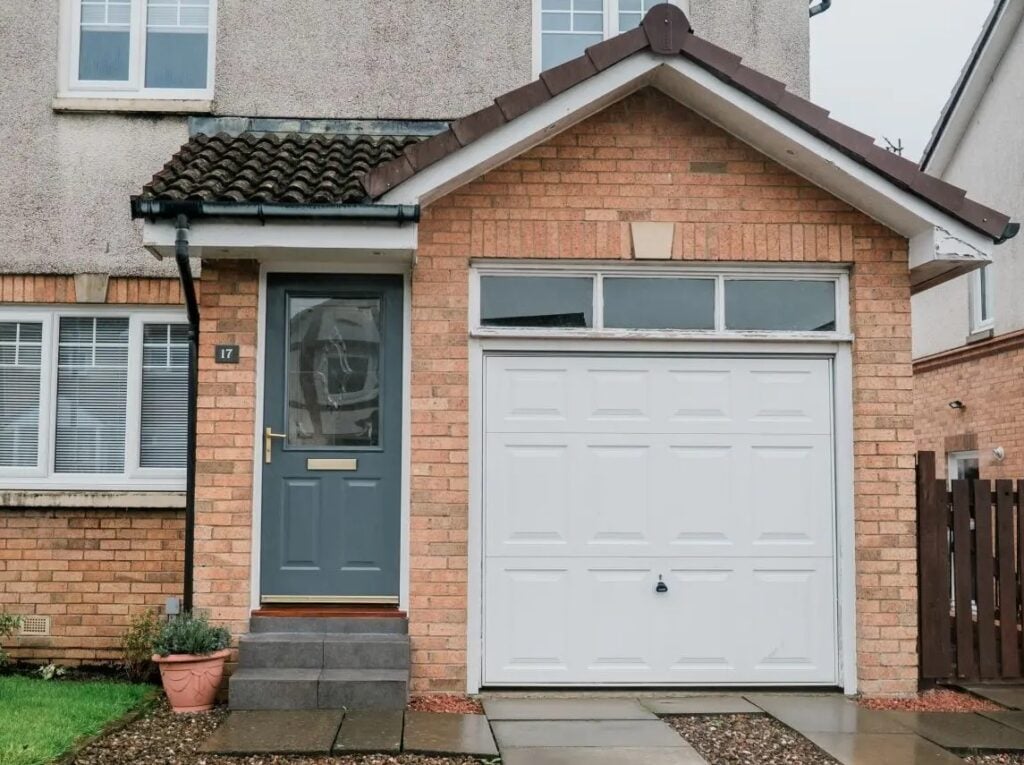
Take a walk around almost any modern housing development in Scotland and you’ll notice the same thing. The driveways are full of cars, while the garages are full of… everything else. Bicycles. Christmas decorations. Boxes that haven’t been opened since moving day. Freezers. Tumble dryers. DIY equipment. Camping gear. Children’s toys. Gardening tools. For many households, the garage has quietly become an oversized storage cupboard rather than somewhere to park the family car. Modern vehicles have also grown considerably over the last twenty years. Many garages, particularly those built on newer housing developments, simply weren’t designed with today’s larger SUVs and family cars in mind. Even when a vehicle technically fits, opening the doors comfortably or getting around the car can be difficult, making the garage an impractical place to park every day. At the same time, the way we use our homes has changed. The rise of hybrid working has created demand for dedicated home offices. Growing families need additional bedrooms, playrooms and teenage spaces. Others are looking for home gyms, hobby rooms or simply a second living area where everyone can spread out. It’s no surprise that more homeowners are looking at the unused space sitting right beside them and asking a simple question: “Why am I giving up so much of my home’s footprint to a room I hardly ever use?” A professionally designed garage conversion allows you to transform that underused space into a warm, comfortable room that feels as though it has always been part of your home—without sacrificing valuable garden space.
Why Garage Conversions Are Perfect for Modern New Build Homes
At Clyde Windows & Construction, a large proportion of our garage conversion enquiries come from homeowners living on modern developments built by companies such as Barratt Homes, David Wilson Homes, Bellway, Taylor Wimpey, Persimmon Homes, Miller Homes, Springfield Properties, CALA Homes, Avant Homes and Robertson Homes. These homes are often beautifully designed and perfectly suited to modern family life. However, it’s common for homeowners to outgrow the available living space far sooner than they expected. Perhaps you’ve started working from home and need a quiet office. Maybe you’ve welcomed another child and could really do with a playroom. Perhaps your teenagers would appreciate their own space, or you’d simply like somewhere to relax away from the main living area. For many families, moving house simply isn’t an attractive option. By the time you’ve factored in estate agency fees, LBTT (Land and Buildings Transaction Tax), solicitor’s costs, removal expenses and the possibility of a higher mortgage, moving purely to gain one additional room can quickly become an expensive decision. Improving the home you already love often makes far more financial sense.
What Could Your Garage Become?
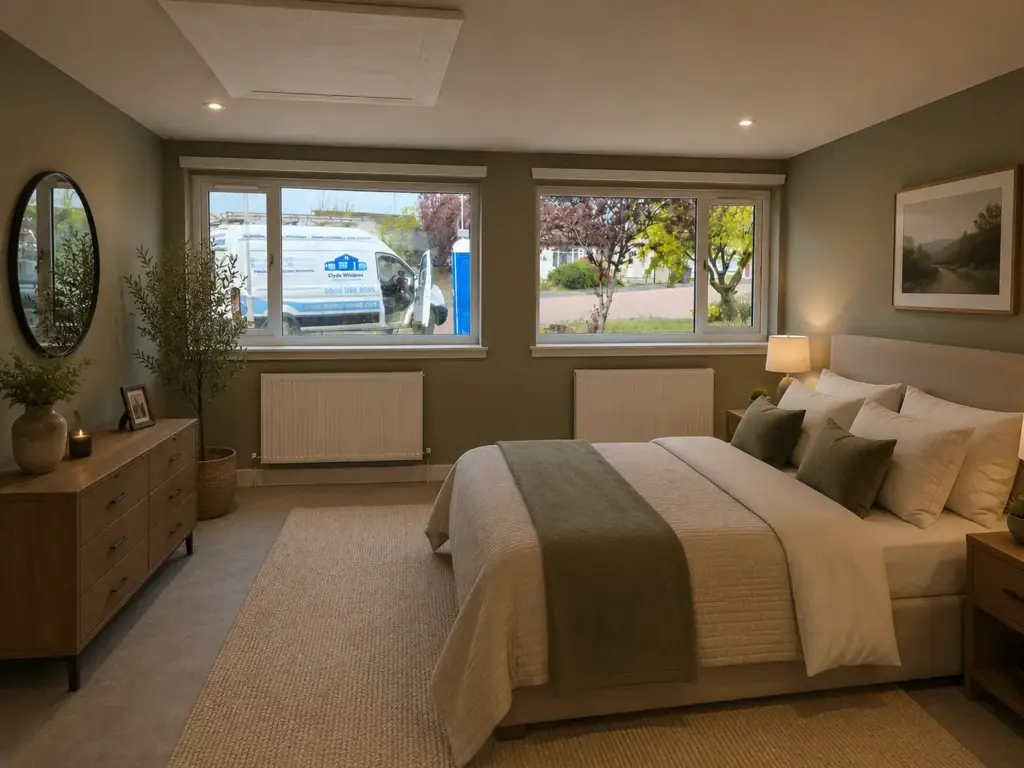
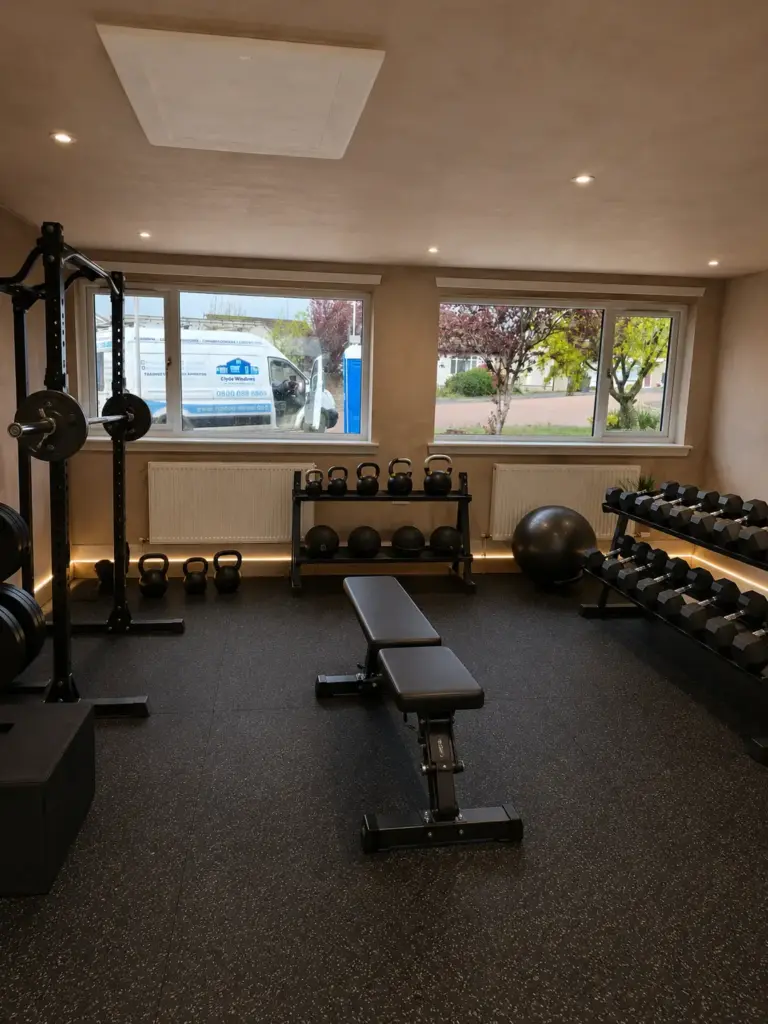
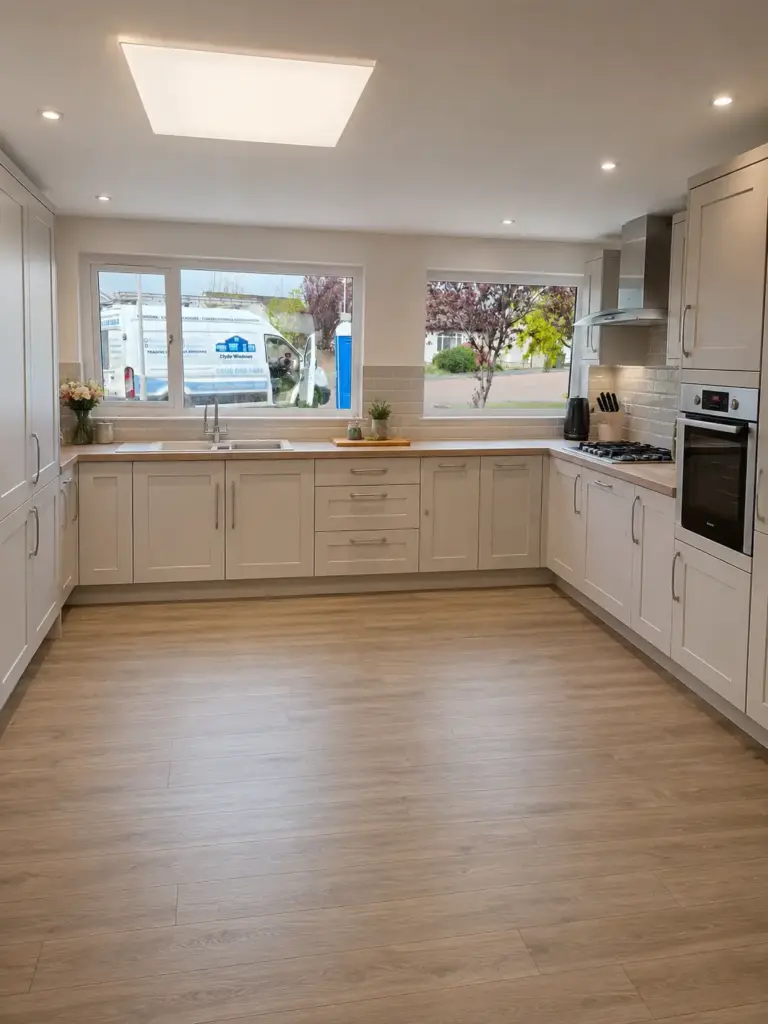
One of the biggest advantages of a garage conversion is its versatility. Depending on your family’s needs, your garage could become:
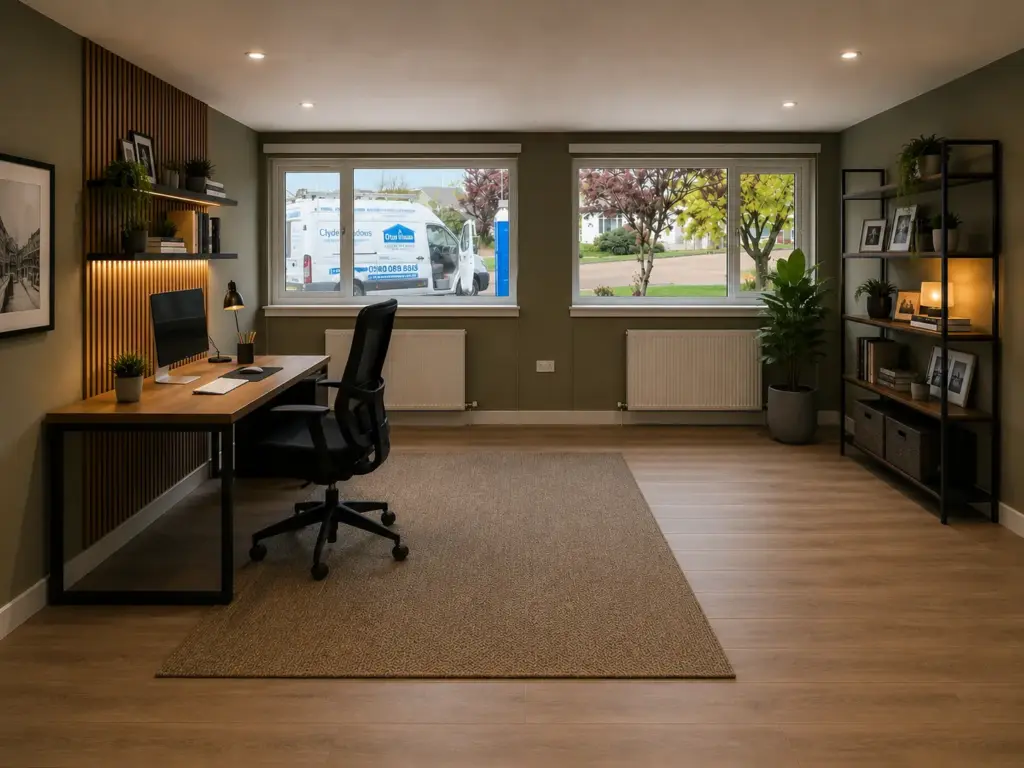
- A bright and productive home office.
- A spacious family room or snug.
- A dedicated playroom.
- An additional bedroom.
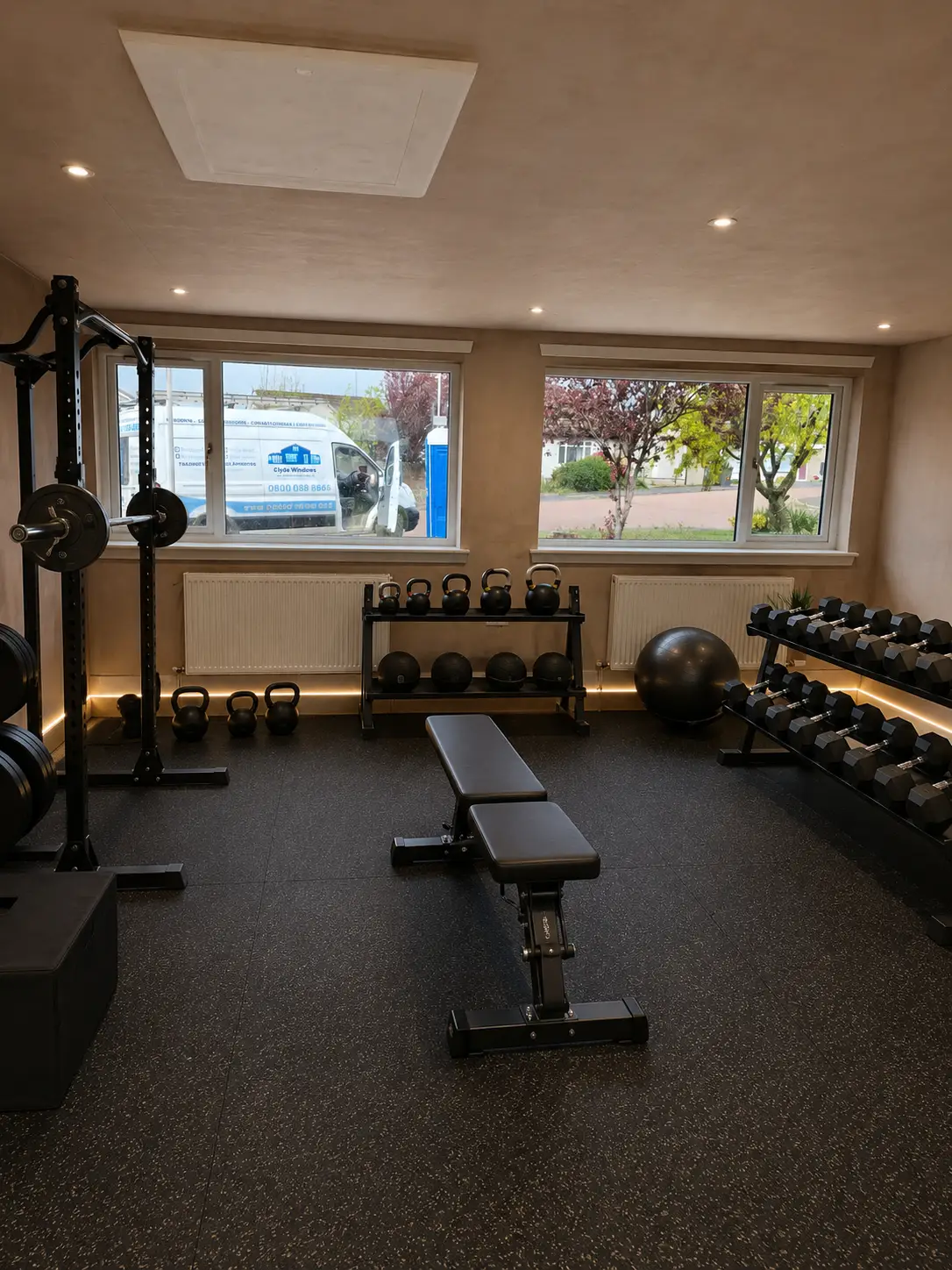
- A home gym.
- A cinema or games room.
- A hobby or craft room.
- A luxury utility or boot room.
- A music room.
The possibilities are almost endless, and because every family uses their home differently, every garage conversion should be designed around the way you live.
- A downstairs shower room or accessible living space.
Ready to Explore the Possibilities? Every home is different, which is why we offer free, no-obligation design consultations. We’ll visit your home, discuss your ideas, assess your garage and explain exactly what’s possible, along with any structural or Building Warrant requirements.
👉 Book Your Free Garage Conversion Consultation Today
Before You Start Comparing Quotations…
One of the biggest mistakes homeowners make is assuming that every garage conversion quotation includes the same work. Unfortunately, that’s rarely the case. Some companies price only the basic building work, while others include everything from architectural drawings and Building Warrant applications through to insulation upgrades, electrical work, plastering and full project management. Understanding exactly what’s included—and what’s not—is often far more important than comparing the headline price. Later in this guide, we’ll explain what garage conversions typically cost in Scotland, what affects the final investment, and why two quotations for seemingly similar projects can differ by several thousand pounds.
Garage Conversion vs Extension
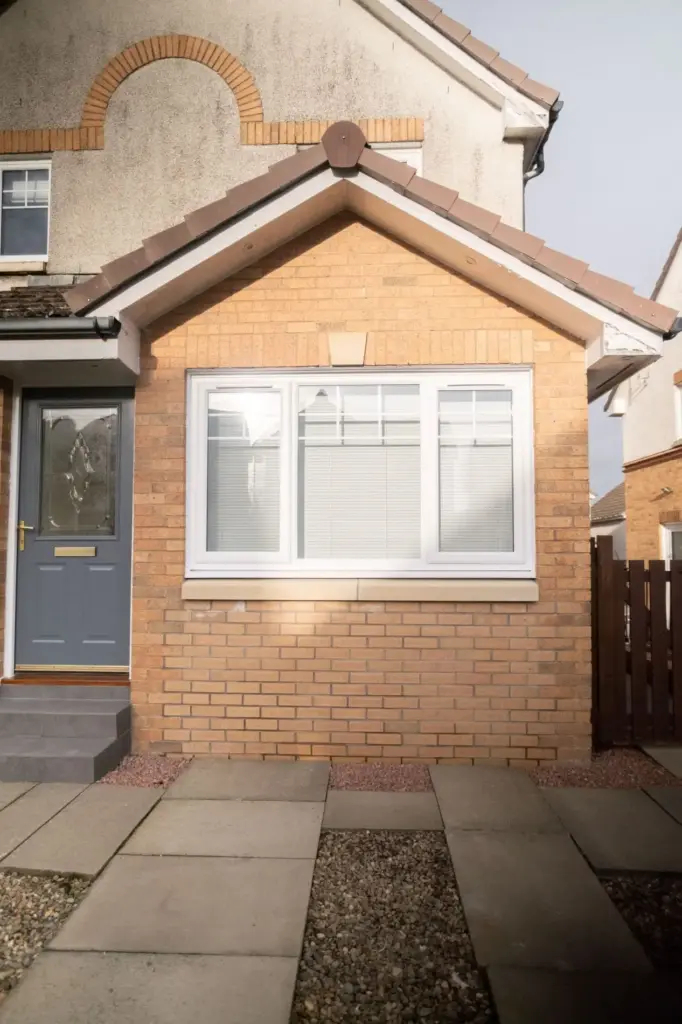
One of the first questions many homeowners ask is whether they should convert their existing garage or build a traditional extension. The truth is that there isn’t a one-size-fits-all answer. Both options have their advantages, and the right choice depends on your home, your budget and, most importantly, what you’re hoping to achieve. A garage conversion is often the most cost-effective way of creating additional living space because you’re making use of a structure that already exists. In many cases, the external walls, roof and foundations are already in place, meaning less construction work is required than with a new extension. An extension, on the other hand, creates entirely new floor space and allows much greater freedom over the size, layout and design of the finished room. If your existing garage isn’t large enough to meet your needs, or you want to create a substantial open-plan kitchen or family living area, an extension may be the better long-term investment. Rather than thinking about which option is “better”, it’s more helpful to think about which option is better for your circumstances.
| Garage conversion | Single-storey extension |
|---|---|
| Makes use of existing garage space | Creates completely new living space |
| Usually a lower overall investment | Generally a higher overall investment |
| Typically less disruption during construction | More extensive building work |
| Usually completed more quickly | Typically takes longer to complete |
| Doesn’t reduce garden space | Usually reduces some garden space |
| Ideal for home offices, bedrooms, playrooms and gyms | Ideal for larger kitchens, dining areas and open-plan living |
| May require the loss of garage storage or parking | Existing garage can remain unchanged |
A garage conversion is often the right option if:
- Your garage is rarely used for parking.
- You simply need one additional room.
- You want to minimise disruption.
- You’re working within a fixed budget.
- You want to retain as much garden space as possible.
A traditional extension may be more suitable if:
- Your existing garage is already a suitable size for its new purpose.
- You need a much larger living area.
- You’re planning a new open-plan kitchen or kitchen diner.
- You regularly use your garage for parking or storage.
- You want to significantly increase the footprint of your home.
One of the most common assumptions is that a garage conversion is always the cheaper option. In many cases, that’s true—but not always. If a garage requires significant structural alterations, extensive drainage works or the creation of a bathroom or utility room, the overall cost can increase considerably. Likewise, a straightforward extension with minimal structural complexity may represent excellent value.
- You’re carrying out a larger programme of renovation works at the same time.
Every property is different, which is why we always recommend discussing your plans before deciding which route to take. During your free design consultation, we’ll happily explain the advantages and disadvantages of both options. If we genuinely believe an extension would better suit your needs, we’ll tell you. Our aim is to help you choose the solution that’s right for your home—not simply the one that’s easiest to sell.
How Much Does a Garage Conversion Cost in Scotland?
It’s probably the first question every homeowner asks—and understandably so. Unfortunately, it’s also one of the most difficult questions to answer. Spend just five minutes searching online and you’ll find garage conversion prices ranging anywhere from £8,000 to more than £40,000. At first glance, it can be confusing, and you may wonder why there is such a huge difference. The simple answer is this: No two garage conversions are the same. Just as no two kitchens, bathrooms or extensions cost exactly the same, the investment required for a garage conversion depends entirely on your property, your requirements and the level of finish you’re looking to achieve. Some garages require very little structural work, while others may need new foundations beneath the garage door opening, upgraded insulation, drainage alterations or additional structural support. Some homeowners simply want a home office, while others are creating a luxury guest suite complete with an en-suite shower room. Every project is unique, and that’s why any company quoting a fixed price without first seeing your garage should be approached with caution.
What Affects the Cost of a Garage Conversion?
There are two sides to every garage conversion quotation:
1. What your property needs to create a safe, compliant and comfortable living space.
2. What you want to make the room work for your lifestyle.
Every garage conversion starts with the property itself. Before we discuss flooring, lighting or decoration, we first need to establish what construction work is required to transform a space that was never designed to be lived in into a room that meets current Scottish Building Standards. Only once we’ve established those requirements do we look at the personal choices that make the room uniquely yours.
What Your Property Needs
Every garage is different. The construction requirements are determined by the garage itself, while the final scope is shaped by the layout, site circumstances and what the homeowner wants to achieve. Some of the key factors we assess include:
Floor Construction
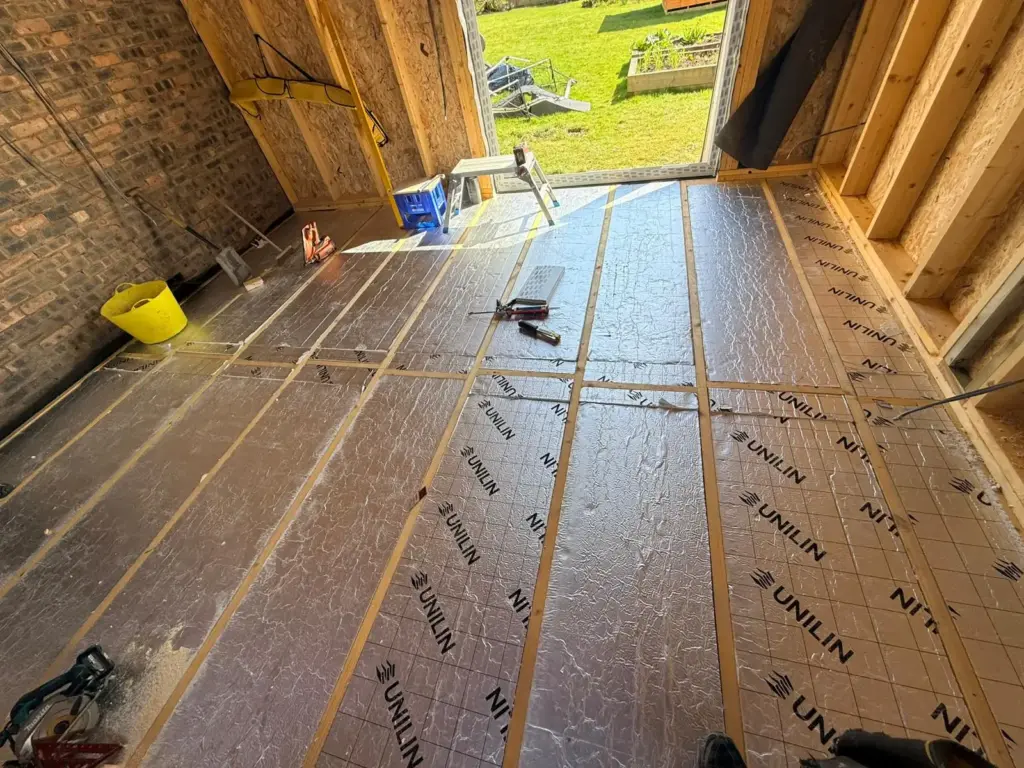
One of the first things we check is the existing garage floor. Questions we ask include:
- Does the floor need to be raised to match the level of the house?
- Does the existing concrete slab need to be removed, insulated and re-laid?
- Is the existing floor suitable to build upon?
The answers to these questions can have a significant impact on both the construction programme and the overall cost.
- What floor finish will be installed once the construction work is complete?
Roof and Ceiling
Garages are rarely built to the same standard as the rest of your home, so the roof and ceiling often require upgrading. Depending on the existing construction, this may include:
- Creating a new insulated ceiling.
- Removing and replacing the existing ceiling.
- Installing additional insulation.
- Improving roof ventilation where required.
Detached garages can sometimes require more extensive roof alterations, including raising external walls before the roof is reinstated.
- Ensuring the finished ceiling height complies with current Building Standards.
Walls and Structural Alterations
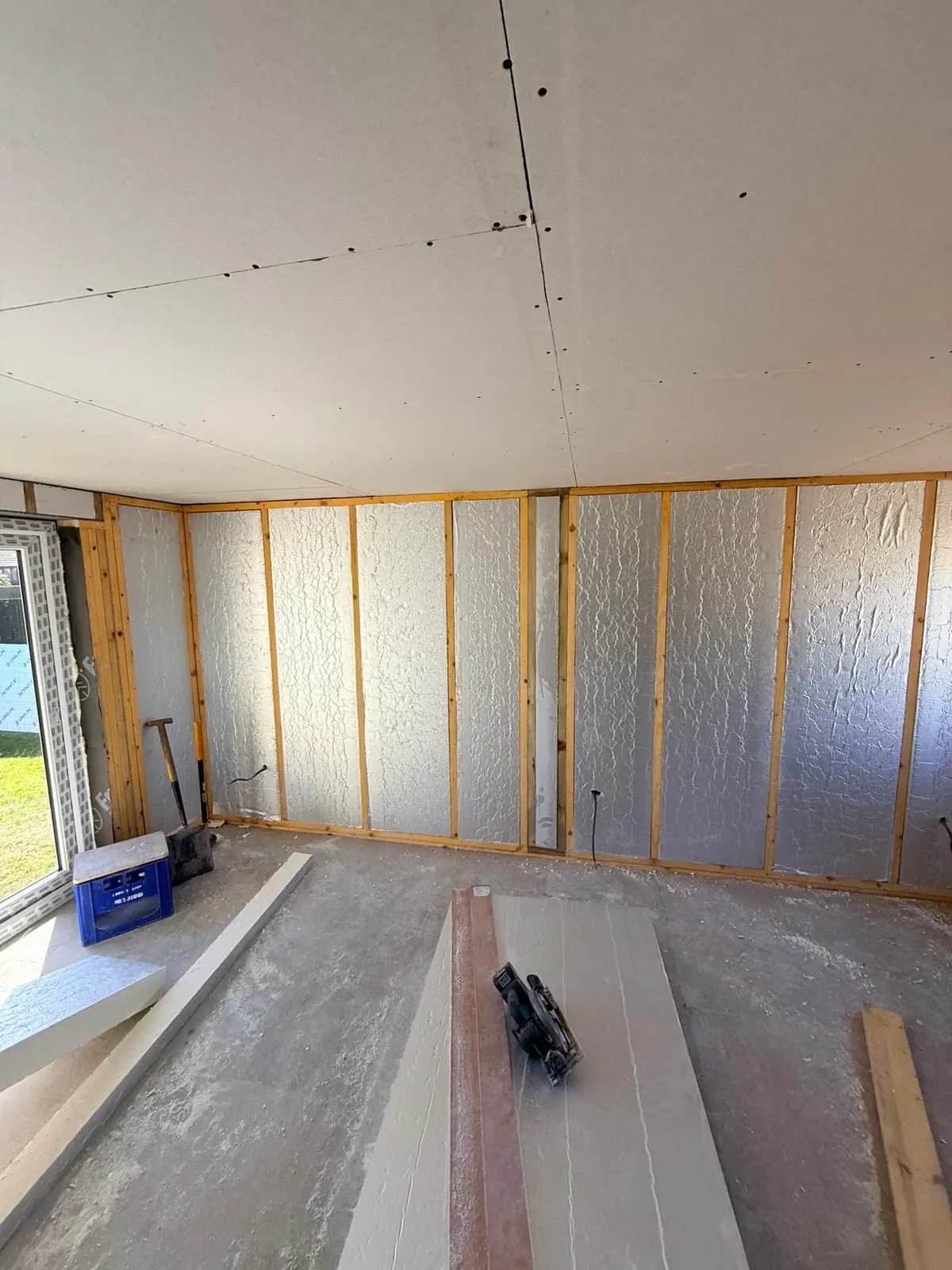
Some garage conversions require very little structural work, while others require significant alterations before they become a comfortable living space. This could include:
- Upgrading or insulating existing external walls.
- Constructing new insulated timber frame walls internally.
- Upgrading walls shared between the house and garage.
- Removing walls to create open-plan living.
- Forming new door openings.
- Enlarging existing openings.
Structural alterations are often one of the biggest factors influencing the final cost of a garage conversion, as they directly affect the amount of labour, materials and engineering required to complete the project.
- Installing structural steelwork where required.
Converting the Garage Door Opening
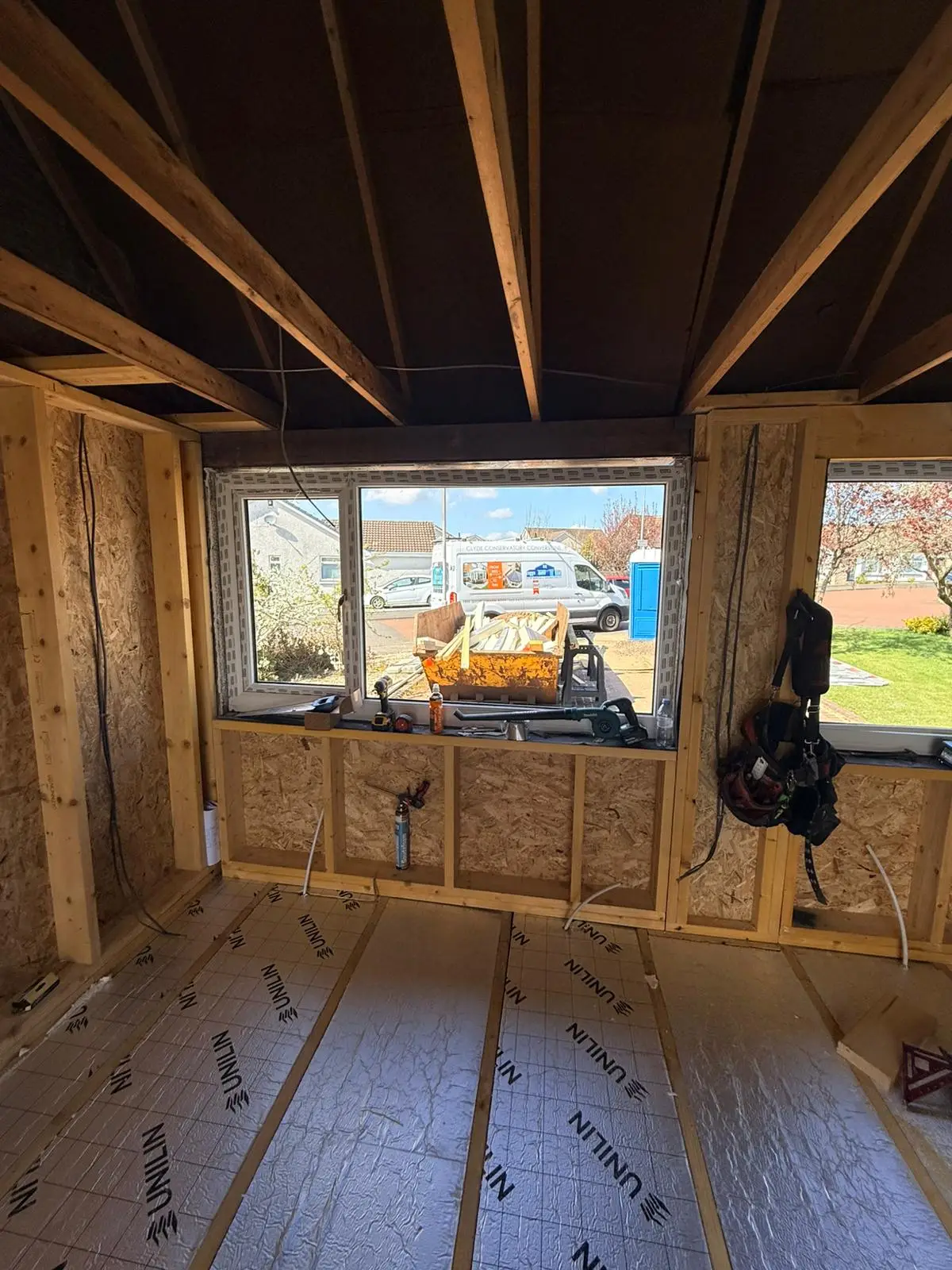
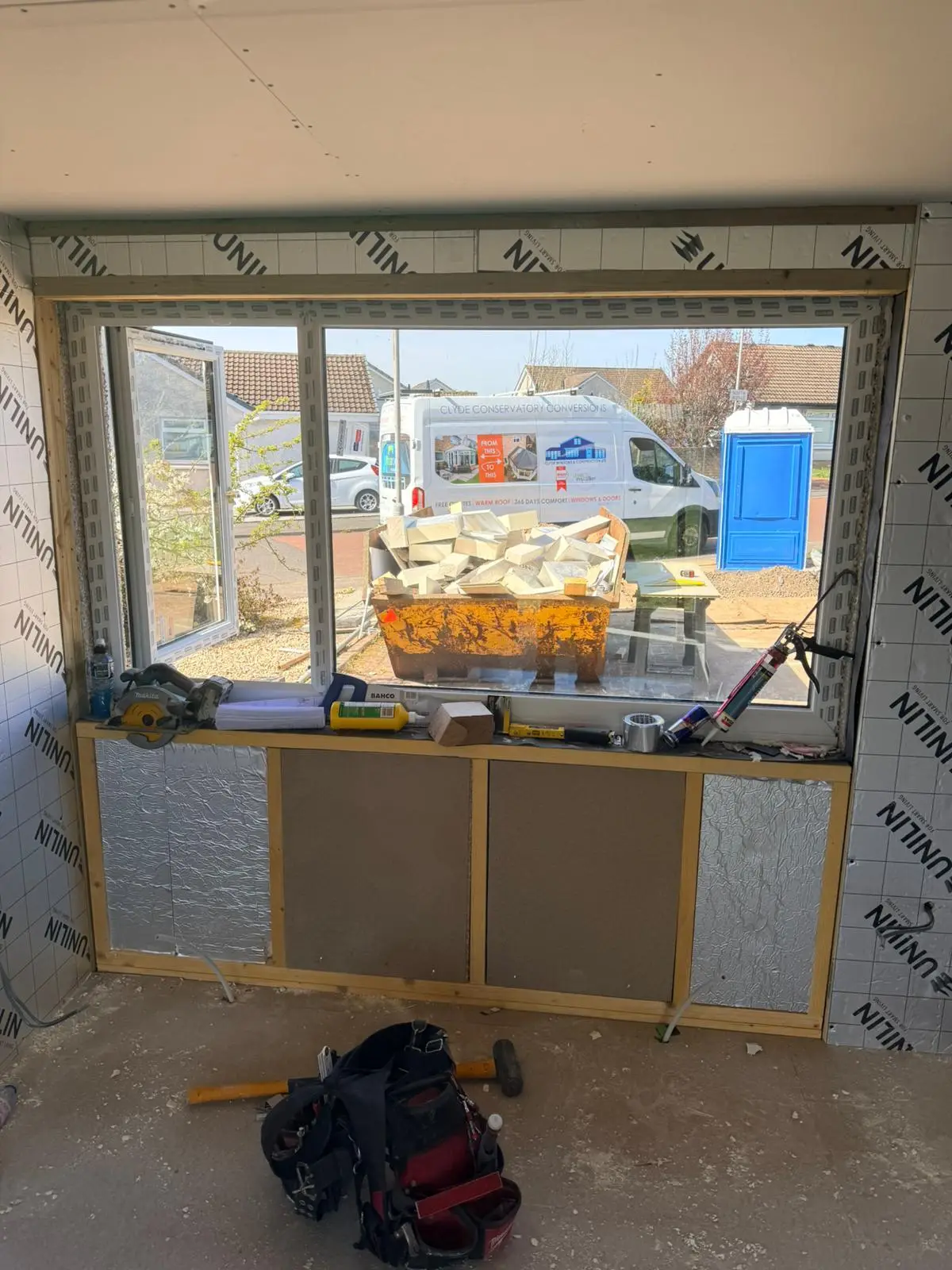
Replacing the garage door with a new wall and window is often the most recognisable part of a garage conversion— but there are many ways of doing it. For example:
- Does a new foundation need to be installed beneath the infill wall?
- Should the brickwork be toothed into the existing walls for a seamless finish?
- Does the opening need to be reduced so the new window matches the proportions of the rest of the house?
These decisions don’t just affect the cost—they also determine whether the finished conversion looks like an obvious alteration or appears as though it has always been part of the original property.
- Are matching external cills and architectural details required?
External Appearance
The external finish can have a surprisingly large influence on the overall cost. For example, matching facing brickwork often requires considerably more time and craftsmanship than roughcasting a new wall. Likewise, sourcing matching bricks, stonework, render or architectural details can all affect the complexity of the project. Our aim is always to create a garage conversion that blends seamlessly with the existing property rather than looking like an afterthought.
Windows and External Doors
The style and specification of your new windows and doors also influence the overall investment. Factors include:
- Creating new window or door openings.
- Window and door styles.
- Frame colours.
- Glazing options.
- Security specification.
- Energy efficiency requirements.
Garage Size
It’s often assumed that a double garage conversion simply costs twice as much as a single garage conversion—but that’s rarely the case. While larger garages naturally require more materials and labour, the construction methods often change too. Larger openings, additional structural support and different room layouts can all influence the final quotation, which is why every project is assessed individually.
What You Want
Once we’ve established what your property needs, we then focus on how you’d like to use the room. This is where your garage conversion becomes completely bespoke. Some homeowners are looking for a simple, practical room, while others want a premium living space that matches the quality and finish of the rest of their home. Your personal choices may include:
Electrical Installation
- Additional sockets.
- LED spotlights or feature lighting.
- Television and media points.
- Data and internet cabling.
- External lighting.
- Smart home features.
Heating and Plumbing
- New radiators.
- Underfloor heating.
- Utility sinks.
- Washing machine connections.
- WC facilities.
- Shower rooms or en-suite bathrooms.
Internal Finishes
- Laminate, LVT or engineered wood flooring.
- Internal doors.
- Skirting boards and facings.
- Decoration.
- Bespoke storage and fitted furniture.
Some homeowners simply want an additional room. Others want a garage conversion that is indistinguishable from the rest of the house. Neither approach is right or wrong—they simply result in different levels of investment.
- Premium finishes throughout.
As you’ll see in the following examples, two garages that appear almost identical from the outside can have completely different construction requirements and completely different specifications, resulting in quotations that vary by several thousand pounds.
Garage Pricing Examples:
To demonstrate how much garage conversion costs can vary, the following examples compare different customers starting with the same garage and the same essential construction requirements, but with very different ideas for the finished space. Example 1 looks at a typical integral garage with accommodation above. The essential construction work is relatively straightforward, allowing us to clearly demonstrate how the customer’s individual specification alone can change the price dramatically. Example 2 looks at an attached garage with no accommodation above, where the starting construction requirements are more extensive. The floor needs to be raised by 300mm, new insulated timber-frame walls and ceiling are required, and additional work is needed to the garage door opening. Together, the examples show how both the construction requirements of the garage and the choices made by the customer determine the final price.
Example 1 – Same Garage, Two Very Different Projects
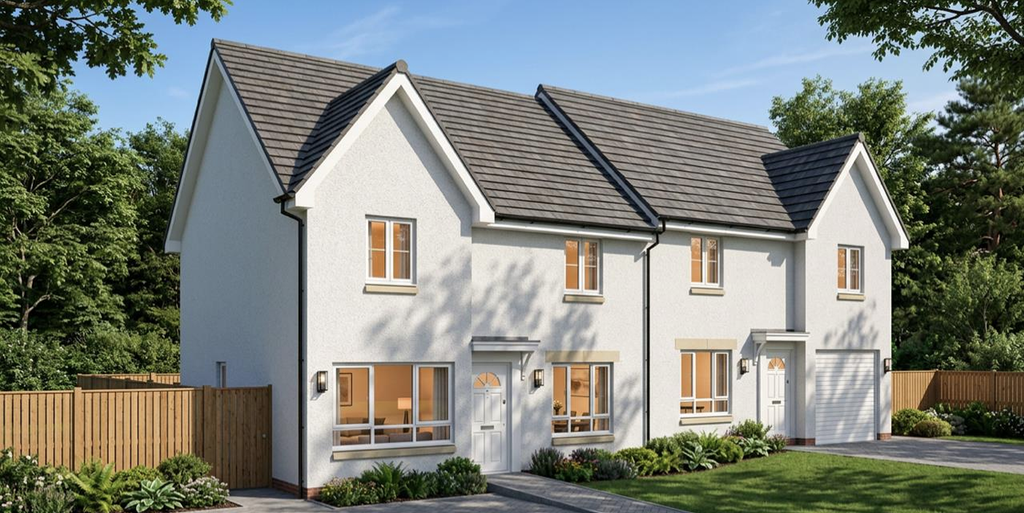
| Scope | Family Room – £14,300 | Utility & Home Office – £20,100 |
|---|---|---|
| Garage size | 5m x 2.5m | 5m x 2.5m |
| Driveway | Lifted; area below window left for flower bed | Lifted and reinstated |
| Garage door opening | Door removed; new foundation, wall & window | Door removed; new foundation & wall. Opening reduced for matching window |
| External cill | Standard | Pre-cast buff cill to match house |
| Side door | Removed and bricked up | Retained; lintel raised for altered floor level |
| Floor | Raised 150mm to house level | Raised 150mm to house level |
| Ceiling | Existing retained | Existing retained |
| External wall | Insulation upgraded | Insulation upgraded |
| Internal walls | Existing retained | New partition creates office & utility |
| New internal openings | 1 – hallway to family room | 2 – hallway to office & kitchen to utility |
| Joinery | Skirtings & facings | Skirtings & facings |
| Sockets | 4 double | 8 double |
| Lighting | 1 ceiling light | 6 LED downlights |
| Data | — | CAT6 connection |
| Ventilation | — | Extractor fan |
| Plumbing & drainage | — | Utility water & waste plus connection to house drainage |
| Heating & safety | 1 radiator; smoke detector included | 1 radiator; smoke detector included |
| Finishes | Walls plastered; flooring by customer | Walls plastered; flooring by customer |
| Total cost | £14,300 | £20,100 |
Example 2 – Attached Garage with no room above
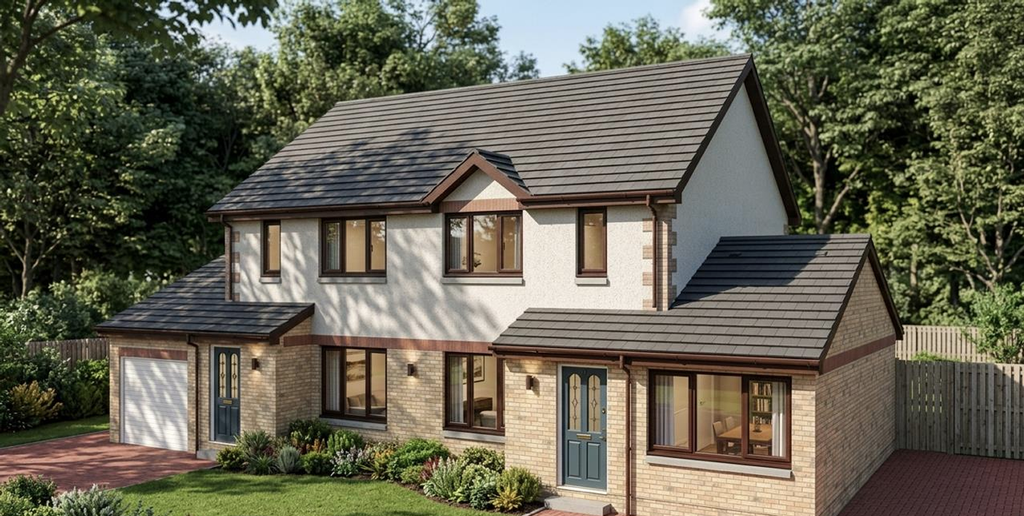
| Scope | Family Room – £19,500 | Bedroom and En-suite – £30,200 |
|---|---|---|
| Garage size | 5.5m x 2.75m | 5.5m x 2.75m |
| Driveway | By customer | Lifted and reinstated |
| Garage door opening | Door removed; new foundation, wall & window. Brickwork toothed in. Lintel raised to increase height of window | Door removed; new foundation and wall constructed. Opening reduced to suit matching window. Brickwork toothed into existing and lintel raised |
| External cill | Standard | Pre-cast concrete cill to match house |
| Floor | Raised 300mm to house level | Raised 300mm to house level |
| Ceiling | Form new insulated ceiling within existing roof trusses. Install external roof vents where required | Form new insulated ceiling within existing roof trusses. Install external roof vents where required |
| External wall | New insulated timber-frame construction to 3 external walls | New insulated timber-frame construction to 3 external walls |
| Internal walls | Existing wall sheeted in plasterboard | Existing wall sheeted in plasterboard. New partition wall constructed to form en-suite, including wet-wall finish internally |
| New external openings | — | 1 – create new opening for window in en-suite |
| New internal openings | 1 – hallway to family room | 1 – hallway to bedroom |
| Joinery | Skirtings & facings | Skirtings & facings |
| Sockets | 4 double | 4 double |
| Lighting | 1 ceiling light | 2 ceiling lights |
| Ventilation | — | Extractor fan to en-suite |
| Plumbing & drainage | — | New hot & cold water supplies and waste connections to existing house drainage. Shower, tray, screen, basin and toilet installed |
| Heating | 1 radiator | 1 radiator and 1 towel rail |
| Smoke detector | Included | Included |
| Plastering | Walls plastered | Walls plastered |
| Flooring | By customer | By customer |
| Total cost | £19,500 | £30,200 |
So, How Much Does a Garage Conversion Cost?
As the examples above demonstrate, there is no single answer to how much a garage conversion cost. The final price is determined by what your property needs and what you want from the finished space. Two garages of the same size can have very different construction requirements, while two identical garages can result in completely different quotations simply because the homeowners want different things. The examples above demonstrate this clearly, with prices ranging from £14,300 to £30,200. That’s why we believe the most useful garage conversion quotation isn’t necessarily the cheapest—or the most expensive. It’s the one that clearly explains what work is required, what specification you’ve chosen and exactly what is included in the price. So, when comparing garage conversion quotations, don’t compare the figure at the bottom of the page alone. Compare the scope of works behind it. In the next section, we’ll explain exactly what should be included in a professionally managed garage conversion, so you know what to look for when comparing quotations.
Want to know more about pricing? Our experienced team of call handlers and Design Consultants are on hand to answer your questions and provide you with advice We can discuss your ideas, explain the construction process and provide honest advice tailored to your property—without any pressure or obligation.
Call us on 01698 888228. Or arrange a callback today and discover what’s possible: book a callback.
What’s Included in a Professionally Managed Garage Conversion?
By this point, you should have a much clearer understanding of the physical work that can go into a garage conversion. But there’s another important consideration when comparing quotations: Who is actually responsible for managing everything? A garage conversion can involve architectural design, Building Warrant applications, structural engineering, groundworkers, builders, joiners, electricians, plumbers, plasterers and inspections—all of which need to happen in the correct order. With some quotations, you’re effectively buying the building work and will need to organise other parts of the project yourself. With a fully project-managed garage conversion, one company takes responsibility for coordinating the entire project.
Before Construction
A professionally managed service may include:
- Initial site survey and assessment.
- Architectural design and drawings.
- Structural engineering where required.
- Building Warrant preparation and submission.
- Detailed specification and scope of works.
- Planning and scheduling the construction programme.
During Construction
Once work begins, your contractor should coordinate the different trades and stages required to deliver the agreed specification. This may include:
- Groundworks and building work.
- Structural alterations and steelwork.
- Joinery.
- Windows and doors.
- Roofing where required.
- Electrical work.
- Plumbing and heating.
- Insulation and plastering.
The important difference isn’t simply that these trades are included. It’s that you shouldn’t have to organise each of them individually. The project manager coordinates the sequence of work, materials and trades so that each stage is ready for the next.
- Internal finishing.
Project Management
This is an important part of the quotation that’s easy to overlook because you can’t physically see it in the finished room. Professional project management can include:
- Coordinating trades.
- Ordering and scheduling materials.
- Managing deliveries.
- Monitoring progress.
- Dealing with issues that arise during construction.
- Keeping the project moving between trades.
- Managing waste and site clearance.
Instead of the homeowner having to coordinate a builder, electrician, plumber, plasterer and other contractors separately, one company takes responsibility for delivering the complete project.
- Providing a single point of contact throughout the project.
Completion & Certification
A professionally managed conversion shouldn’t finish simply because the last trade has left site. Depending on the project, the final stages can include:
- Electrical certification.
- Final Building Standards inspections.
- Completion Certificate submission.
- Snagging and minor remedial works.
- Final handover.
- Guarantees and relevant certification.
What Isn’t Included?
This is equally important. A good quotation should clearly identify anything that isn’t included. For example, depending on the agreed contract, this might include decorating, finished flooring, specialist furniture, landscaping or other customer-supplied items. There is nothing wrong with exclusions. The important thing is that you know about them before signing the contract.
What Does “Fully Managed” Really Mean?
For us, a fully managed garage conversion means you shouldn’t need to become the project manager of your own building project. From the initial design and approvals through to construction, individual trades and completion, there should be one company responsible for bringing everything together. When comparing quotations, therefore, don’t simply ask: “What’s included in the building work?” Also ask: “Who is responsible for everything else?”
The Garage Conversion Process
One of the most common questions we’re asked is: “What actually happens after I decide to go ahead?” A professionally managed garage conversion involves much more than simply turning up and starting building work. Before construction can begin, the project needs to be designed, approved, technically surveyed and carefully planned. While every project is different, a typical Clyde Windows & Construction garage conversion follows the process below.
Step 1 – Accepting Your Quotation & Paying Your Deposit
Once you’re happy with the proposed design, specification and quotation, the first step is to formally proceed with your project. Your contract will clearly detail the agreed scope of works and specification, along with the payment schedule and any important information relating to your project. Once the contract is signed and the agreed deposit has been paid, we can begin the design and pre-construction stages.
Step 2 – Architectural Design
The next stage is to turn the proposed garage conversion into a detailed architectural design. Our architectural team will prepare the drawings required for your project, taking into consideration the existing property, proposed layout and the work required to create the new space. Depending on the project, this can include details relating to:
- The existing and proposed floor plans.
- New internal and external openings.
- Garage door infill.
- Windows and doors.
- Wall, floor and ceiling construction.
- Insulation requirements.
- Structural alterations.
These drawings form an important part of the Building Warrant process and provide the technical basis for the work that follows.
- Drainage and ventilation where applicable.
Step 3 – You Approve the Drawings
Before we progress your application, you’ll have the opportunity to review the proposed drawings. This is an important stage. We’ll ask you to check that the proposed layout accurately reflects what you’ve agreed with us, including the position of new walls, doors, windows and other significant design features. Once you’re satisfied with the design, you’ll approve the drawings and we can move on to the Building Warrant application.
Step 4 – Building Warrant Application
Where a Building Warrant is required, the necessary drawings and supporting information are submitted to your local authority for approval.
The council’s Building Standards team will assess the proposed work against the relevant Scottish Building Regulations and may request additional information or amendments before granting the warrant. We manage this process on your behalf, including responding to relevant queries and arranging any required amendments to the drawings or specification. Construction work requiring a Building Warrant cannot begin until the appropriate approval is in place. We’ll explain Building Warrants—and why they’re so important—in much more detail in the next section of this guide.
Step 5 – Technical Home Survey
Once the necessary approvals are in place, we’ll carry out a detailed technical survey of your home before the project moves into construction. The purpose of this visit is different from your initial design consultation. Your initial consultation establishes what you want to achieve. The technical survey establishes the final details of how we’re going to build it. Measurements and relevant construction details are checked, and the agreed specification is reviewed so that the project can be prepared for installation. This is also the stage at which any final manufacturing dimensions for items such as windows and doors can be confirmed.
Step 6 – Preparing Your Project for Installation
Once the Building Warrant is approved and the technical survey is complete, your project can move into the installation planning stage. Materials can be ordered or manufactured, the required trades can be scheduled and the construction programme can be coordinated. A garage conversion can involve several different trades, so getting the sequence right is important. Depending on your project, this might involve groundworkers, builders, joiners, window and door installers, electricians, plumbers, heating engineers and plasterers. With a fully managed project, we coordinate that programme for you. Our typical lead time for installation is approximately 8–12 weeks once the Building Warrant has been approved and the technical survey completed, although this can vary depending on the individual project and workload.
Step 7 – Construction Begins
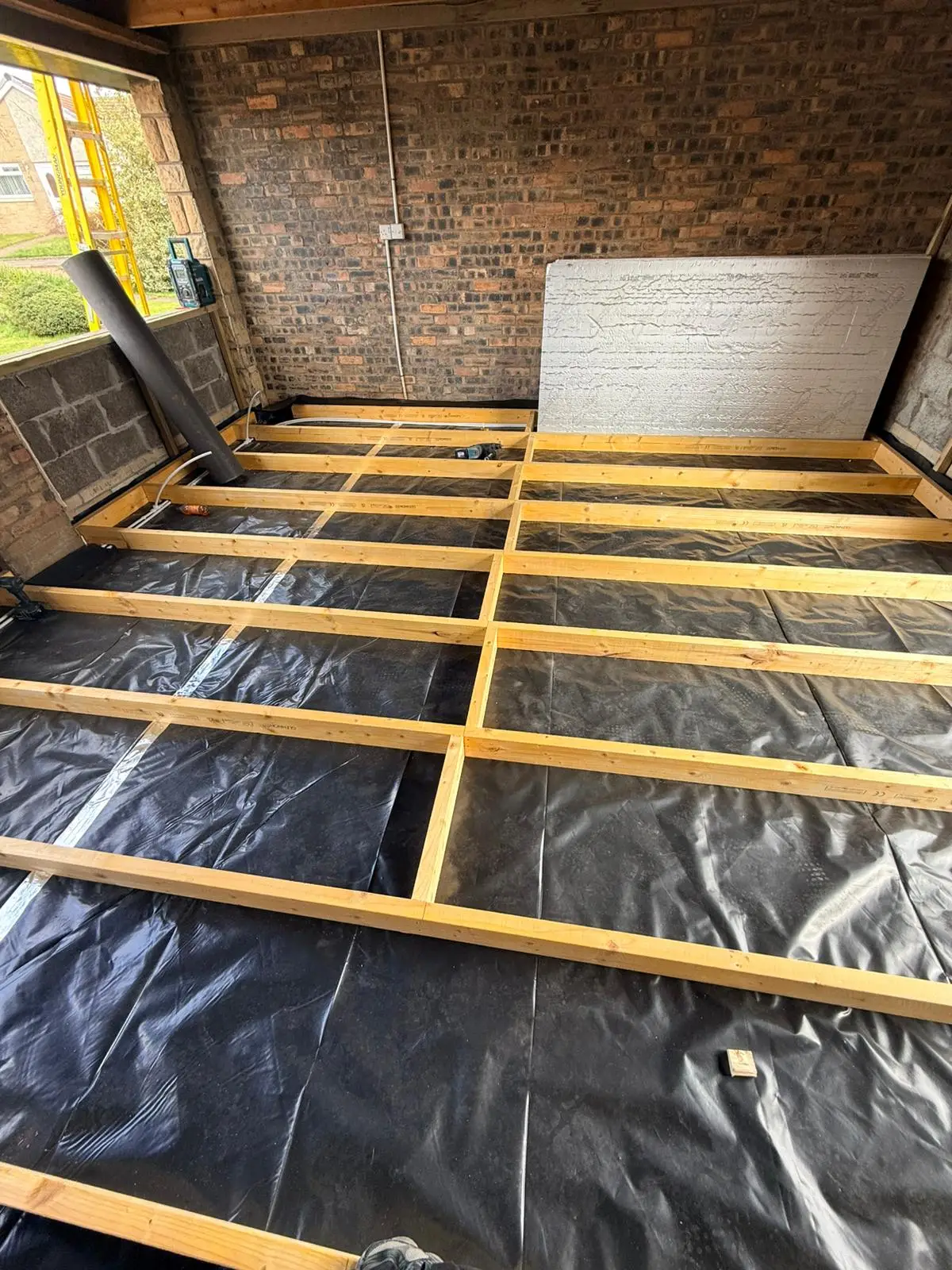
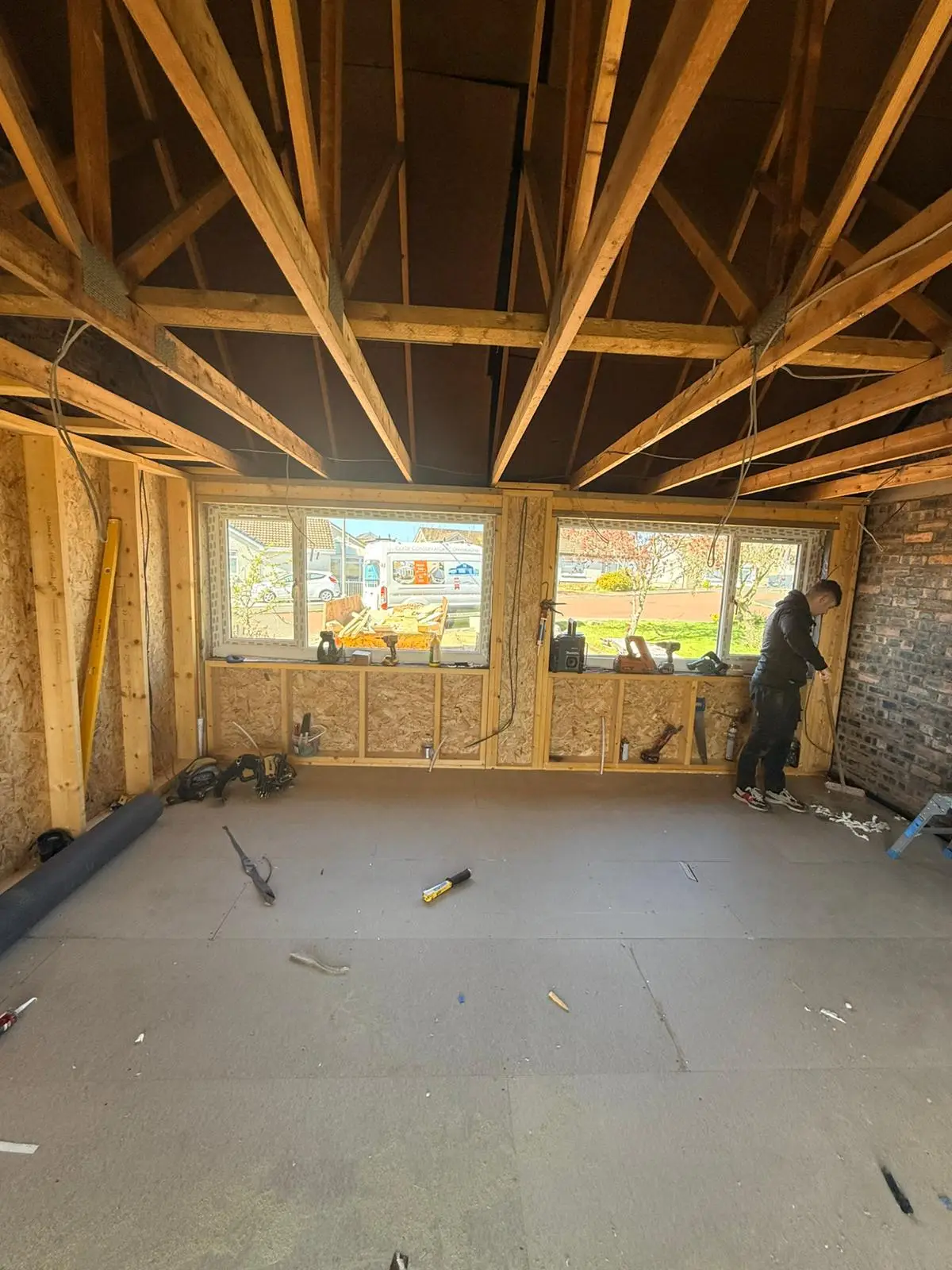
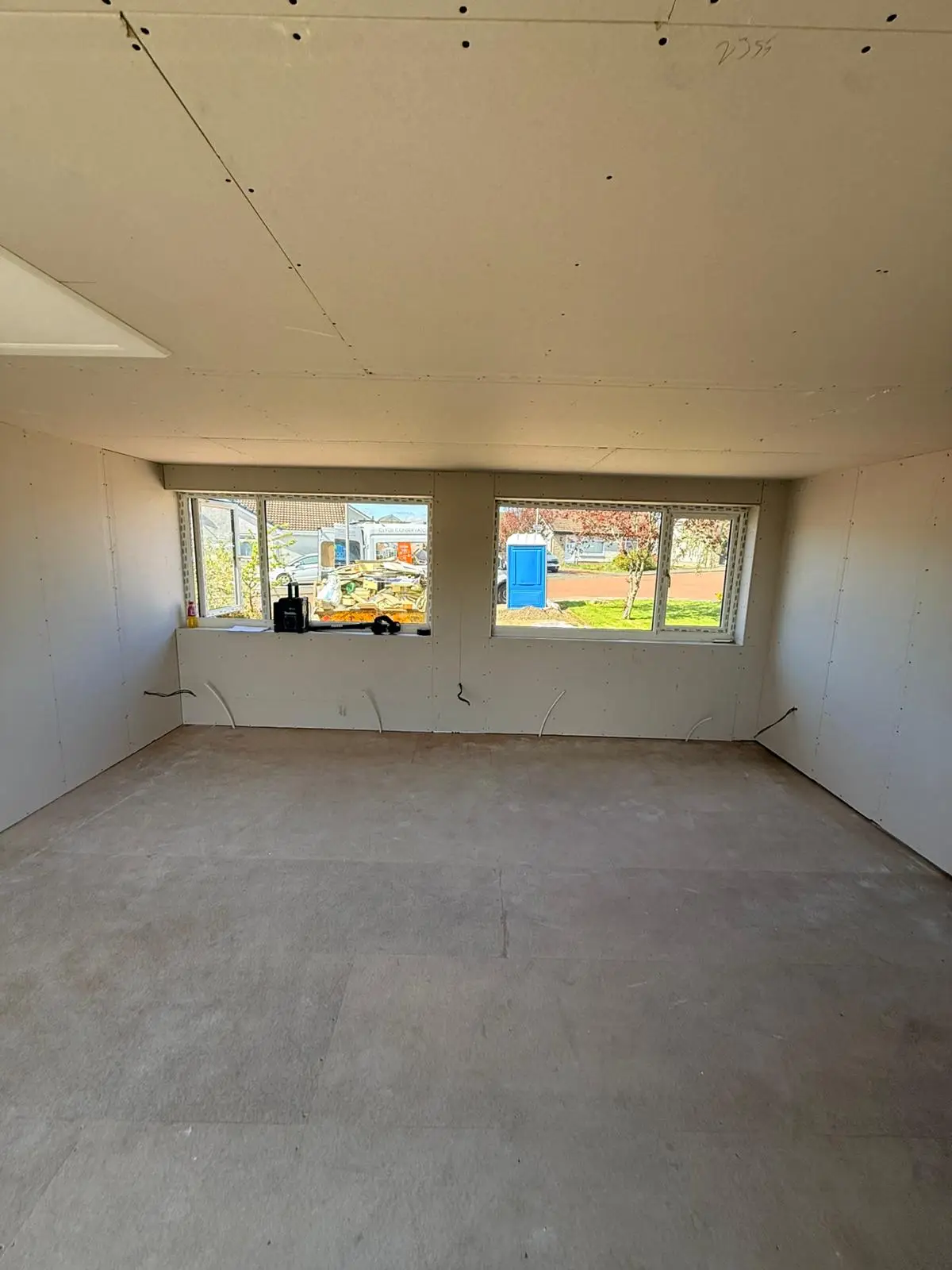
Once your installation date arrives, the physical transformation of your garage begins. The exact sequence will depend on the scope of works, but the project may involve:
- Site preparation and groundworks.
- Removal of the existing garage door.
- Foundations and external infill construction.
- Structural alterations.
- New window and door openings.
- Floor construction and insulation.
- Wall and ceiling upgrades.
- New internal partitions and doorways.
- Windows and doors.
- First-fix electrical and plumbing work.
- Plasterboarding and plastering.
- Second-fix electrical, plumbing and joinery work.
Not every garage conversion requires every one of these stages. Your construction programme will be based on the specific scope of works agreed for your home.
- Final finishing works.
Step 8 – Completion, Inspection & Certification
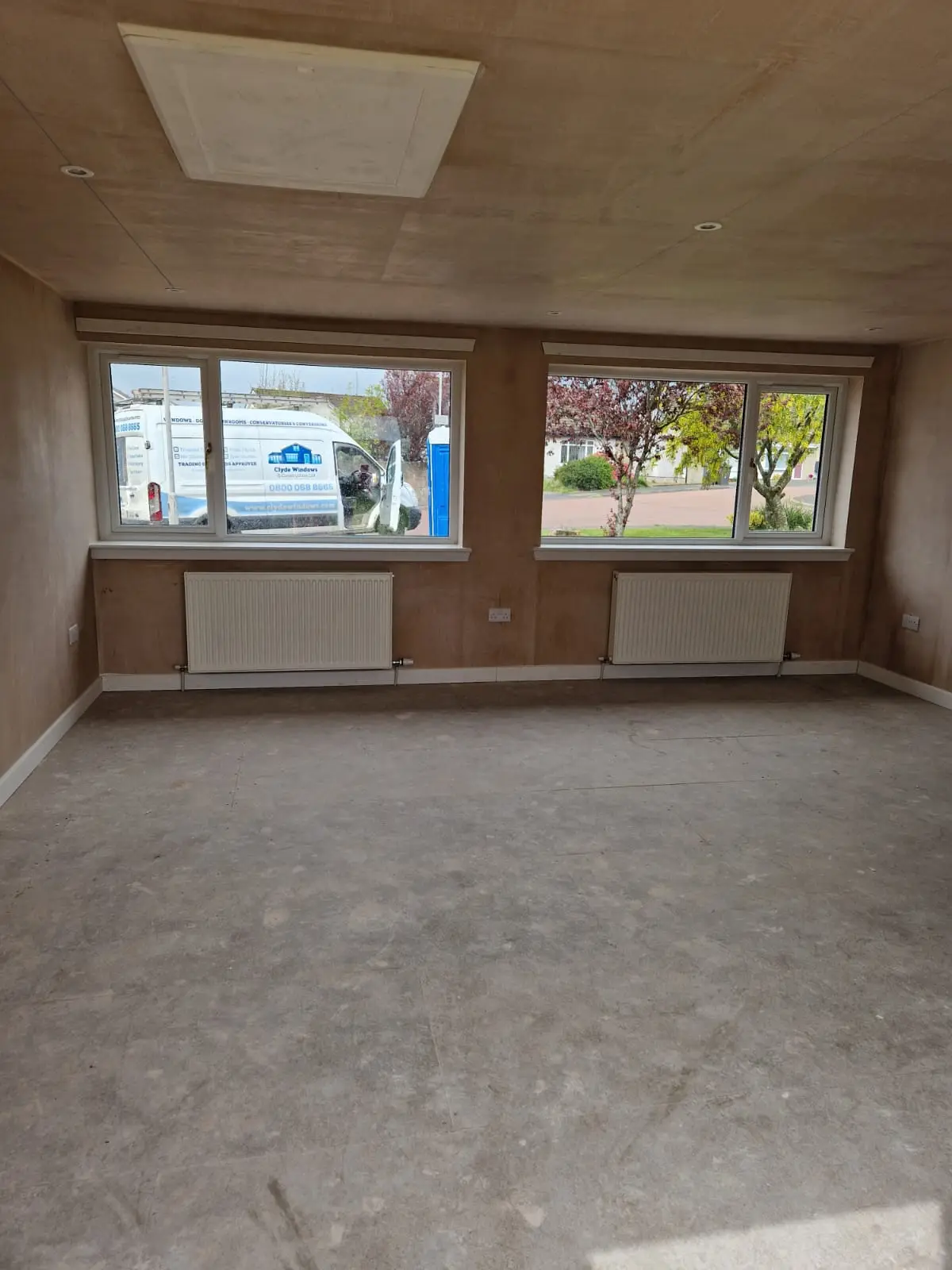
Once the main construction work is complete, the project moves into its final stages. Any relevant inspections and certification can be completed, along with final checks and any minor snagging items identified. Where a Building Warrant applies, the appropriate completion process must also be followed with the local authority. The objective is simple: To take your garage from an underused part of the house to a properly designed, professionally constructed new living space—with one company managing the project from beginning to end.
How Long Does the Whole Process Take?
It’s important to distinguish between the construction time and the overall project timescale. The physical garage conversion itself may be completed relatively quickly, but architectural design, drawing approval, the Building Warrant process, technical surveying, ordering materials and scheduling trades all happen before installation begins. That’s why we recommend planning your garage conversion well in advance—particularly if you’re hoping to have the new room ready for a specific date.
Thinking About a Garage Conversion? You don’t need to understand every stage before speaking to us. That’s what we’re here for. Our team can assess your garage, discuss what you’d like to create and explain the likely design, Building Warrant, construction and timescale requirements for your particular property.
👉 Book Your Free Garage Conversion Consultation Today
Building Warrants Explained
Building Warrants are one of the areas of garage conversions that homeowners often find confusing. You may have heard that converting a garage is straightforward, that it doesn’t require Planning Permission, or even that because you’re working within the existing footprint of your home, no formal approval is required. However, Planning Permission and a Building Warrant are two completely different things. While many garage conversions may not require Planning Permission, a Building Warrant will normally be required in Scotland when converting a garage into habitable accommodation.
What Is a Building Warrant?
A Building Warrant is the formal approval of proposed building work by your local authority’s Building Standards department. Before the relevant work begins, drawings and technical information are submitted showing what you intend to build and how the proposed conversion will comply with the applicable Scottish Building Standards. Put simply, Planning Permission is concerned primarily with whether you’re allowed to make a particular development or alteration, while a Building Warrant is concerned with how that work will be constructed. We’ll explain Planning Permission separately in the next section.
Why Does a Garage Conversion Need a Building Warrant?
A garage was originally designed and constructed as a garage—not as a habitable room. The standards required for somewhere you park a car or store household items are understandably different from those required for a bedroom, home office or family room. The Building Warrant process establishes what work is required to make that change safely and compliantly. Architectural drawings and technical information are prepared showing the existing garage, the proposed conversion and how the various elements will be constructed. Depending on the project, Building Standards may consider:
- Structure – including new openings, lintels, structural steelwork and alterations to existing walls.
- Floors, walls and ceilings – including construction methods, insulation, damp protection and thermal performance.
- Windows and doors – including new openings, garage door infill, glazing and relevant escape requirements.
- Ventilation and heating – ensuring the new accommodation can be appropriately ventilated and heated.
- Fire safety – including separation, escape requirements and smoke detection where applicable.
- Drainage and plumbing – particularly where the conversion includes a utility room, WC, shower room or en- suite.
Where significant structural alterations are proposed, structural engineering calculations or additional technical information may also be required. The purpose of the Building Warrant isn’t simply to give you permission to convert your garage. It establishes and approves how the conversion will be constructed before the relevant work begins.
- Electrical work – where new or altered electrical installations form part of the conversion.
Can Work Start While We’re Waiting for the Building Warrant?
This is an important point. Where work requires a Building Warrant, that work should not begin simply because the application has been submitted. The Building Warrant needs to be granted before the relevant construction work starts.
This can sometimes be frustrating when you’re eager to get started, but the process protects both the homeowner and the contractor. It means the proposed construction has been assessed before you’re committed to building it.
Does the Building Warrant Affect the Cost?
Yes—but not simply because there’s an application fee. More importantly, the Building Warrant process can confirm construction requirements that affect the final scope and cost.
What Happens If Building Standards Ask for Changes?
This isn’t necessarily anything to worry about. During the assessment process, Building Standards may ask for additional information, clarification or amendments before they’re satisfied that the proposed works comply. Where we’re managing the Building Warrant process, our architectural team will deal with the relevant technical queries and make any necessary amendments to progress the application. Once the local authority is satisfied, the Building Warrant can be granted and the project can progress towards the technical survey and installation stages.
What Happens When the Garage Conversion Is Finished?
Receiving the Building Warrant at the beginning isn’t the end of the process. Once the work has been completed, the appropriate completion procedure must also be followed. The completed work may be inspected and the necessary documentation and certification provided before the local authority accepts the completion certificate. This is an important part of the process because it provides a formal record that the work has been completed in accordance with the approved Building Warrant, subject to the local authority’s completion procedures.
What If Someone Offers to Convert My Garage Without a Building Warrant?
If a contractor tells you that a Building Warrant isn’t required, don’t simply take their word for it. Ask why. There may occasionally be circumstances where particular work does not require a warrant, but the requirements should be established properly rather than assumed because the work appears straightforward. Carrying out work without a required Building Warrant can create problems later, particularly when selling or remortgaging the property, and retrospective resolution can be considerably more complicated than getting things right from the beginning.
Building Warrants Don’t Need to Be Complicated
For homeowners, architectural drawings, technical specifications and communication with Building Standards can sound like one of the more daunting parts of a garage conversion. With a fully managed project, however, you shouldn’t have to navigate that process alone. At Clyde Windows & Construction, the Building Warrant process forms part of the wider project journey. We can coordinate the design, prepare the required information, manage the application and deal with Building Standards before progressing the project towards construction. That leaves you to concentrate on the considerably more enjoyable question:
What are you going to do with your new room?
In the next section, we’ll explain another commonly misunderstood subject—Planning Permission for garage conversions in Scotland, including when it may be required and how it differs from a Building Warrant.
Planning Permission
Planning Permission and a Building Warrant are often confused, but they serve very different purposes. Planning Permission is primarily concerned with the development or alteration of the property and its impact on the surrounding area.
Do I Need Planning Permission for a Garage Conversion in Scotland?
In many cases, converting an existing garage into living accommodation will not require a full Planning Permission application, particularly where the work is internal and there are only minor alterations to the external appearance of the property. However, this should never simply be assumed. Whether Planning Permission is required will depend on the property, the proposed alterations and any restrictions that apply to your home or development.
When Might Planning Permission Be Required?
Planning considerations are more likely to arise where the proposed conversion significantly changes the external appearance or use of the property. For example:
- Significant alterations are being made to the exterior of the garage.
- New or substantially altered window or door openings are proposed.
- The garage is detached and its proposed use raises additional planning considerations.
- The property is within a conservation area.
- The property is a listed building.
- Previous planning conditions restrict how the garage can be used.
The last point is particularly important for homeowners on modern housing developments.
- Permitted development rights have been removed or restricted.
Planning Conditions on New-Build Developments
Just because your neighbour has converted their garage doesn’t automatically mean you’re free to do the same. When new housing developments are approved, the original Planning Permission can sometimes include conditions affecting individual properties. In some cases, garages or parking provision may be subject to restrictions intended to ensure that sufficient off-street parking remains available. There may also be restrictions on certain external alterations or circumstances where normal permitted development rights have been removed. This doesn’t necessarily mean that you can’t convert your garage. It may simply mean that a Planning Permission application is required before you do so. That’s why the planning history and circumstances of the individual property should be considered rather than relying on what has happened elsewhere on the estate.
What About Replacing the Garage Door with a Window?
One of the most visible changes involved in a garage conversion is usually replacing the existing garage door with a new wall and window.
Whether this alteration requires Planning Permission will depend on the circumstances of the property and the extent of the proposed changes. This is another reason why we recommend establishing the planning position at the design stage rather than assuming that because the work appears relatively minor, formal permission won’t be required.
Planning Permission vs Building Warrant
The simplest way to remember the difference is: Planning Permission asks: “Are you allowed to make this alteration?” A Building Warrant asks: “How will it be built safely and compliantly?” Your project may require one, both, or—in some circumstances—neither for particular elements of work. They are separate processes, and receiving Planning Permission does not remove the need for a Building Warrant where one is required.
What If Planning Permission Is Required?
If your proposed garage conversion does require Planning Permission, it doesn’t necessarily mean there’s a problem with the project. It simply means an application needs to be prepared and submitted to the relevant local authority before the project progresses. The council will assess the proposal against the relevant planning policies and any conditions affecting the property before making its decision. The important thing is to identify this before construction begins, rather than discovering a planning restriction after work has already been carried out.
Don’t Assume — Check
Most homeowners don’t need to become experts in Scottish planning legislation before considering a garage conversion. But you should expect the planning position to be considered as part of a professionally managed project. If Planning Permission isn’t required, that’s useful to establish. If it is required, it’s far better to know at the beginning. The key is not to assume that because another garage on your street has been converted, the same rules automatically apply to yours. Every project should be considered on its own circumstances before work begins.
Common Garage Conversion Mistakes to Avoid
A garage conversion can be one of the most effective ways to create additional living space, but getting the right result involves more than simply choosing a contractor and agreeing a price. Many of the problems homeowners encounter can be avoided by asking the right questions before signing a contract. Here are some of the most common mistakes to look out for.
1. Comparing Price Without Comparing the Scope
Two garage conversion quotations can differ by thousands of pounds without either necessarily being overpriced. Starting prices can be useful, but only if you understand the specification and assumptions behind them. The important question is: what exactly is included? Compare the scope carefully and check whether design, approvals, structural work, electrics, plumbing, plastering and project management are included or will become additional costs later. A lower starting price doesn’t always mean a lower final price.
2. Assuming You Understand the Permissions Required
Don’t assume that because most of the work takes place within an existing garage, formal approval isn’t necessary. A garage conversion will normally require a Building Warrant in Scotland, while Planning Permission is a separate consideration and may or may not be required. Be particularly cautious if you’re told: “You don’t need one.” Ask why and make sure the position has been properly established before work begins. Trying to resolve unauthorised building work afterwards can be considerably more difficult than getting the correct approvals from the outset.
3. Treating the External Finish as an Afterthought
The garage door infill is one of the most visible parts of the finished conversion, and small details can make a big difference. A garage door opening may require a new foundation, alterations to the existing lintel, matching brickwork or render, an appropriate external cill and careful positioning of the new window. Think about how you want the finished conversion to look. Do you simply want the opening closed as economically as possible, or do you want the new window, brickwork, cills and external finishes to look as though they were always part of the original house? Those are very different specifications. Window proportions, frame colours, brick matching, roughcast, render, cills and other external details can make the difference between a conversion that integrates naturally with the property and one that always looks like a former garage. Discuss the external appearance as carefully as the internal layout.
4. Underestimating the Importance of Insulation and Ventilation
A garage wasn’t originally designed as living accommodation. Creating a room that looks good isn’t enough—it also needs to perform properly throughout the year.
Floors, external walls, ceilings and roofs may require thermal upgrades, while certain roof constructions may require additional ventilation. These are largely invisible once the project is finished, but they’re an important part of creating a properly constructed conversion.
5. Not Planning Your Electrics Early Enough
It’s much easier to decide where you want sockets, lighting, television points and data connections before the walls are plastered. Think about how you’ll actually use the room. Where will the television go? Where will your desk sit? Will you need CAT6 for a home office? Are four sockets really enough? Would additional lighting make the room more usable? Making these decisions during the design stage is generally much easier than changing things after the room has been finished.
6. Forgetting About Storage
This is particularly relevant if your garage currently contains everything from bicycles and tools to Christmas decorations and garden furniture. Converting the garage creates valuable living space, but everything currently stored there still needs somewhere to go. Before converting the entire garage, consider whether you need:
- Built-in storage.
- A separate storage cupboard.
- External storage.
- A garden shed.
It’s a simple consideration, but an important one.
- A partial garage conversion that retains some dedicated storage space.
7. Designing the Room Around Today’s Needs Only
Think beyond what you need right now. A playroom may eventually become a study. A home office could become a bedroom. A family room might later become accessible downstairs accommodation. You don’t need to future-proof every possible eventuality but considering how the room could evolve may influence decisions such as the number of sockets, heating provision, window position and overall layout.
8. Not Establishing Responsibilities and Exclusions
Before signing, establish both what is excluded and who is responsible for coordinating the project. If the quotation says “flooring by customer”, “ready for decoration” or excludes landscaping or driveway reinstatement, understand exactly what will remain for you to complete. Ask: “When you’ve finished, exactly what will still be left for me to do?” A professional quotation should make those exclusions clear. A fully project-managed service should give you one clear point of responsibility rather than leaving you to coordinate multiple trades yourself.
Get the Important Decisions Right at the Beginning
Most garage conversion problems aren’t caused by the idea of converting the garage itself. They arise from unclear specifications, incorrect assumptions or decisions that weren’t made before construction started. Take the time to understand what your property requires, decide what you want from the finished room, compare quotations on a like-for-like basis and make sure responsibilities are clearly defined. A well-planned garage conversion should leave very few surprises once construction begins.
If you’re unsure what questions you should be asking, ask us. Our design consultants can assess your garage, talk through the options and help you understand what’s required before you make any commitment.
👉 Book Your Free Garage Conversion Consultation Today
Frequently Asked Questions About Garage Conversions
We’ve covered the main stages of planning, pricing and building a garage conversion throughout this guide, but there are still plenty of practical questions homeowners ask us during their initial consultation. Here are answers to some of the most common.
How much does a garage conversion cost in Scotland?
There is no single price. The cost depends on what the property needs and the specification you choose. Our pricing examples earlier in this guide show how seemingly similar garages can produce very different quotations. The most reliable approach is a site assessment followed by a scope-based quotation.
Do I need a Building Warrant to convert my garage in Scotland?
In most cases, yes. Converting a garage into habitable accommodation will normally require a Building Warrant in Scotland. See the Building Warrants Explained section for the full process.
Do I need Planning Permission for a garage conversion?
Not necessarily. Many garage conversions do not require a full Planning Permission application, but restrictions can apply to individual properties and developments. The planning position should therefore be checked rather than assumed.
How long does a garage conversion take?
For a typical garage conversion, the construction work itself will usually take around 2–4 weeks. More complex projects involving significant structural alterations, extensive plumbing and drainage, en-suites, multiple rooms or substantial building work can take considerably longer. The overall timescale from deciding to proceed to completing the conversion will vary between contractors. Before construction begins, there may also be architectural drawings, Building Warrant approval, technical surveys, material ordering and other preparation to complete. Contractor availability and current workload will also influence how quickly work can start. At Clyde Windows & Construction, once the necessary approvals are in place and the technical survey has been completed, our typical lead time to installation is approximately 8–12 weeks. This allows us to order or manufacture the required materials and coordinate the different trades involved in delivering the project. So, when asking a contractor how long a garage conversion will take, it’s worth asking two separate questions: “When can you start?” and “Once you start, how long will the work take?”
Can I convert an integral garage?
Yes. Integral garages are commonly converted because they are already incorporated into the main footprint of the property. The existing construction still needs to be assessed to establish the required scope.
Can I convert an attached garage with no room above?
Yes. Garages with their own roof can require more work than an integral garage with accommodation above.
Roof, ceiling, insulation and ventilation requirements are common areas to assess.
Can I convert a detached garage?
Potentially, yes. Detached garage conversions can involve different considerations from integral or attached garages, particularly around insulation, services, drainage, access and the existing roof and wall construction. Some detached garages may also require more substantial alterations before they’re suitable for the intended use. A site assessment is therefore particularly important.
Can I convert a double garage?
Yes—and converting a double garage doesn’t necessarily mean simply doubling the cost of a single garage conversion. Some costs are shared across the overall project, while the larger space may introduce different structural, heating, electrical and layout requirements. A double garage can also provide considerably more flexibility, including the possibility of creating multiple rooms or retaining part of the garage for storage.
Can I convert only part of my garage?
Yes. A partial garage conversion can be an excellent option for homeowners who want additional living space but don’t want to lose all of their garage storage. For example, part of the garage could become a home office, utility room or internal living space while another section remains dedicated to bicycles, tools or household storage. The proposed layout and separation between the different areas would need to be properly designed.
Can I remove the wall between my garage and house?
Potentially. Creating a larger opening between the garage and the existing house can be a great way to create open-plan living space, but whether it’s possible depends on the existing structure. If the wall is load-bearing, structural engineering and additional support such as a lintel or steel beam may be required. This should be properly assessed rather than assumed.
Can you create a new doorway between the garage and house?
Yes, subject to the construction of the existing wall and the necessary Building Standards requirements. This is common where the garage doesn’t currently have internal access or where the existing doorway isn’t in the best position for the proposed layout.
Can I have a bedroom in my converted garage?
Yes, provided the proposed conversion and room satisfy the relevant requirements. A garage conversion can create valuable additional bedroom accommodation, particularly for growing families or homeowners looking to create more accessible living space downstairs. The design needs to consider the appropriate requirements for the proposed use of the room.
Can I add an en-suite bathroom or WC?
Yes. An en-suite, shower room or WC can be incorporated where the layout and existing services make it practical.
This will normally introduce additional plumbing, hot and cold water supplies, waste connections, drainage and ventilation, as well as the sanitaryware and internal finishes. As shown in our pricing examples, these additions can significantly change the overall scope and cost.
Can I turn my garage into a utility room?
Yes. Utility rooms are a popular option, particularly where the garage is located beside the kitchen. Water supplies, appliance waste connections, drainage, electrical points and ventilation can all be incorporated into the design where required.
Will my garage floor need to be raised?
Not always, but it’s very common. Garage floors are often lower than the house floor and may need to be upgraded or raised as part of the conversion. The required build-up is confirmed during design and technical assessment.
Will the existing garage ceiling need to be replaced?
Not necessarily. Some garages already have a suitable ceiling, particularly where there is accommodation above. Garages with their own roof may require additional insulation, ventilation or a new ceiling. The existing construction therefore needs to be assessed before the scope is confirmed.
Will the conversion look like it used to be a garage?
It shouldn’t have to. Careful attention to the external design can make a substantial difference. Matching the window proportions, frame colour, brickwork or roughcast, external cills and other architectural details can help the conversion blend naturally with the rest of the property. The level of integration you want should be discussed and included within the specification before work begins.
Will you match the existing brickwork?
Where possible, matching or closely complementary materials can be used. However, exact matches aren’t always possible due to the age, availability and weathering of the original materials. The proposed external finish should therefore be discussed before the work begins so you understand how the completed conversion is intended to look.
Do I need to arrange my own electrician, plumber or plasterer?
That depends entirely on the contractor you choose and what’s included within their quotation. Some garage conversion contractors provide only the core building or joinery work, leaving you to arrange electricians, plumbers, plasterers or other specialist trades separately. Others offer a fully project-managed service where all the required trades are included and coordinated for you. Neither approach is necessarily wrong, but it’s important to understand who is responsible for what before you accept a quotation. If you’re comparing prices from different contractors, check whether all the required trades are included. A cheaper quotation can quickly become more expensive if you later discover that electrical work, plumbing, plastering or other essential elements need to be arranged and paid for separately. At Clyde Windows & Construction, our garage conversions are fully project managed, with the trades included within your agreed scope of works coordinated as part of the overall project.
Are flooring and decorating included?
That depends on the agreed specification. Some customers prefer us to complete the construction and leave the room ready for their own decoration and flooring, while others may want additional finishing work included. Your quotation should clearly identify what is included and what will remain for you to complete yourself.
Can I live in the house while my garage is being converted?
In most cases, yes. Garage conversions generally involve less disruption than constructing a completely new extension because much of the existing structure is already in place. There will still be noise, dust, tradespeople and periods of disruption, particularly when new openings are being created between the garage and house, but homeowners will normally remain in their property throughout the project.
Will converting my garage add value to my home?
It can, but the impact on value depends on the property, location, quality of the conversion and demand for both living space and parking in the local market. For many homeowners, however, the immediate value isn’t simply financial. Turning an underused garage into a room your family uses every day can significantly increase the usable living space and functionality of the home without requiring a traditional extension.
Is a garage conversion cheaper than an extension?
Generally, a garage conversion can be considerably less expensive than constructing an equivalent amount of completely new floor space because much of the structure already exists. However, it isn’t a direct like-for-like comparison. The existing garage construction and the amount of upgrading or structural alteration required will determine how significant that saving is.
How do I get an accurate garage conversion price?
The best starting point is to speak to an experienced garage conversion contractor who offers a free home consultation and can provide a realistic indication of the likely project cost before you commit to architectural fees or a Building Warrant application. Different contractors work in different ways. Some may not provide a firm quotation until architectural drawings have been prepared and the Building Warrant specification is known. Others may be able to assess the garage, discuss your requirements and provide a detailed estimate or quotation at an earlier stage. At this point, any price may still be subject to the final design, technical survey and Building Warrant requirements, as these can identify additional work that wasn’t apparent during the initial consultation. The important thing is to establish a realistic budget as early as possible. This allows you to understand whether the project is financially viable before investing significant time and money progressing the design. At Clyde Windows & Construction, we provide a free home design consultation and prepare a detailed quotation based on the information available at that stage, subject to the subsequent technical design and Building Warrant approval.
Should I Get an Architect Before Asking for Garage Conversion Prices?
Not necessarily—and in many cases, we would recommend establishing your likely construction budget first. An architect’s primary role is to design your project and produce the technical information required for approval. While some architects have excellent knowledge of construction costs, their role isn’t necessarily to obtain current contractor pricing or design every element around a specific build budget unless this forms part of their brief.
This can sometimes result in a technically excellent design with a specification that’s considerably more expensive to build than the homeowner expected. You could therefore spend money developing drawings, structural details and a Building Warrant application, only to obtain construction quotations afterwards and discover that the approved design is outside your budget. Changing the specification at that point may also mean revising drawings or seeking amendments to the approved Building Warrant. A better starting point can be to speak to an experienced garage conversion contractor before commissioning the final design. Discuss what you’d like to achieve, establish a realistic construction budget and identify where different design or specification choices could affect the price. The architectural and Building Warrant stages can then progress with a much clearer understanding of what you want to build and what you’re comfortable spending to build it. Design and budget should work together from the beginning—not meet for the first time after the drawings have been completed.
👉 Book Your Free Garage Conversion Consultation
Why Choose Clyde Windows & Construction?
By this point, you know what a professionally planned garage conversion involves and what to look for when comparing contractors. So, why choose Clyde Windows & Construction?
One Company. One Project. One Point of Responsibility.
A garage conversion can involve design, approvals, groundworks, structural work, joinery, windows and doors, electrics, plumbing, heating and plastering. You could organise each element individually. Or you can choose one company to coordinate the complete project for you. At Clyde Windows & Construction, our garage conversions are fully project managed, with the different stages and trades coordinated as part of one overall project. That means one point of responsibility from initial design through to completion, backed by experience across the different trades and construction elements involved.
Free Home Design Consultation
We believe you should have a realistic understanding of what’s possible—and what it’s likely to cost—before spending money progressing architectural drawings and Building Warrant applications. That’s why we start with a free, no-obligation home consultation. We’ll visit your property, assess the existing garage, discuss what you’d like to create and talk you through the likely construction requirements. Most importantly, we’ll listen to what you actually need from the space and the budget you’re comfortable working with.
A Detailed Quotation Before You Commit
As we’ve demonstrated throughout this guide, a garage conversion price means very little without understanding what’s included.
Our quotations are based on the proposed scope of works and your individual specification rather than simply applying a generic price per square metre. We’ll explain what we’ve allowed for, what specification has been included and any exclusions or assumptions you need to be aware of. That gives you the opportunity to understand the likely investment before deciding whether you want to proceed.
Designed Around Your Home — And Your Budget
There is rarely only one way to approach a garage conversion. You may want the most cost-effective solution possible. You may want the new window, brickwork, cills and external finishes carefully matched so the conversion looks as though it has always been part of the house. Or you may want to completely transform the space with structural alterations, an en-suite, utility room, bespoke electrics or a premium internal specification. We’ll help you understand the options and, importantly, how those choices affect the price.
Ready to Transform Your Garage?
Your garage could already contain the extra room your home needs. Whether you’re considering a family room, home office, bedroom, utility room, playroom, gym or something completely different, the best place to start is simply finding out what’s possible and what it’s likely to cost. You don’t need architectural drawings, a confirmed planning position or detailed knowledge of Building Standards before speaking to us. Arrange your FREE, no-obligation home design consultation and one of our experienced design consultants will visit your property, assess your garage, discuss your ideas and provide clear guidance on the likely scope of works and costs involved.
Call us today on 01698 888228 or book your FREE Garage Conversion Consultation online 👉 Start your garage conversion enquiry
Not Ready to Book Yet?
That’s absolutely fine. Save this guide, discuss the possibilities with your family and take some time to decide exactly what you’d like your garage to become. And when you’re ready, Clyde Windows & Construction will be here to help you take the next step.