
Choosing a new front or back door usually comes down to one big question: uPVC doors vs composite doors — which is better? It’s a decision thousands of Scottish homeowners face every year, and the honest answer is that both are excellent, low-maintenance options that massively outperform old timber doors. The right choice depends on your budget, your priorities and where the door is going. At Clyde Windows & Construction, we manufacture, supply and fit both types across Scotland every single week, so we’ve seen first-hand how each performs in real homes and real Scottish weather. In this in-depth guide, we compare uPVC and composite doors on cost, construction, energy efficiency, security, lifespan, noise reduction and style — so you can make your decision with confidence.
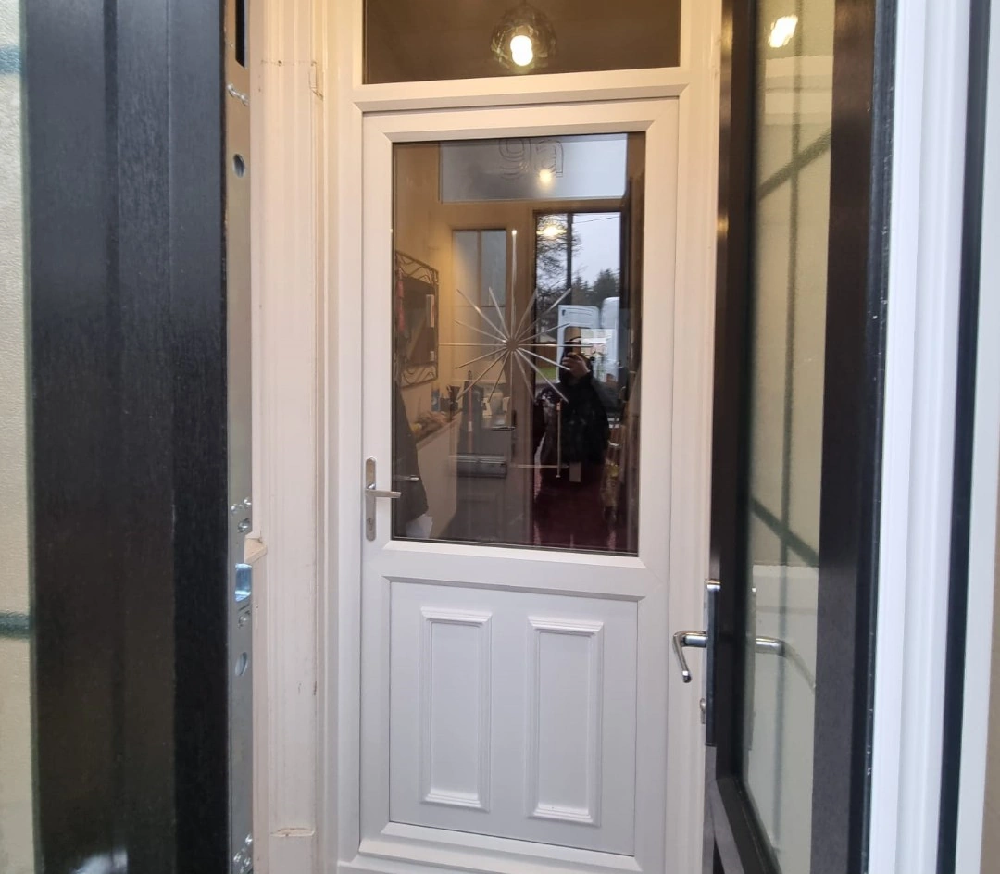
What Is a uPVC Door?
A uPVC (unplasticised polyvinyl chloride) door is built from a rigid, weather-resistant plastic frame combined with an insulated door panel. The frame is made from multi-chambered uPVC profiles — internal chambers that trap air and improve insulation — often reinforced with galvanised steel for rigidity. The door panel itself is typically around 28mm thick with an insulating core sandwiched between uPVC skins.
uPVC is the most popular door material in the UK, and for good reason: it’s affordable, genuinely weatherproof, and needs almost no maintenance. A quick wipe with warm soapy water a few times a year is all it takes to keep one looking its best — no sanding, no painting, no varnishing, ever.
It’s also worth saying that modern uPVC doors are a world away from the flimsy, discolouring white doors of the 1990s. Today’s versions are available in dozens of colours and realistic woodgrain foils, come with multi-point locking systems as standard, and feature insulated cores that keep draughts firmly outside where they belong.
What Is a Composite Door?
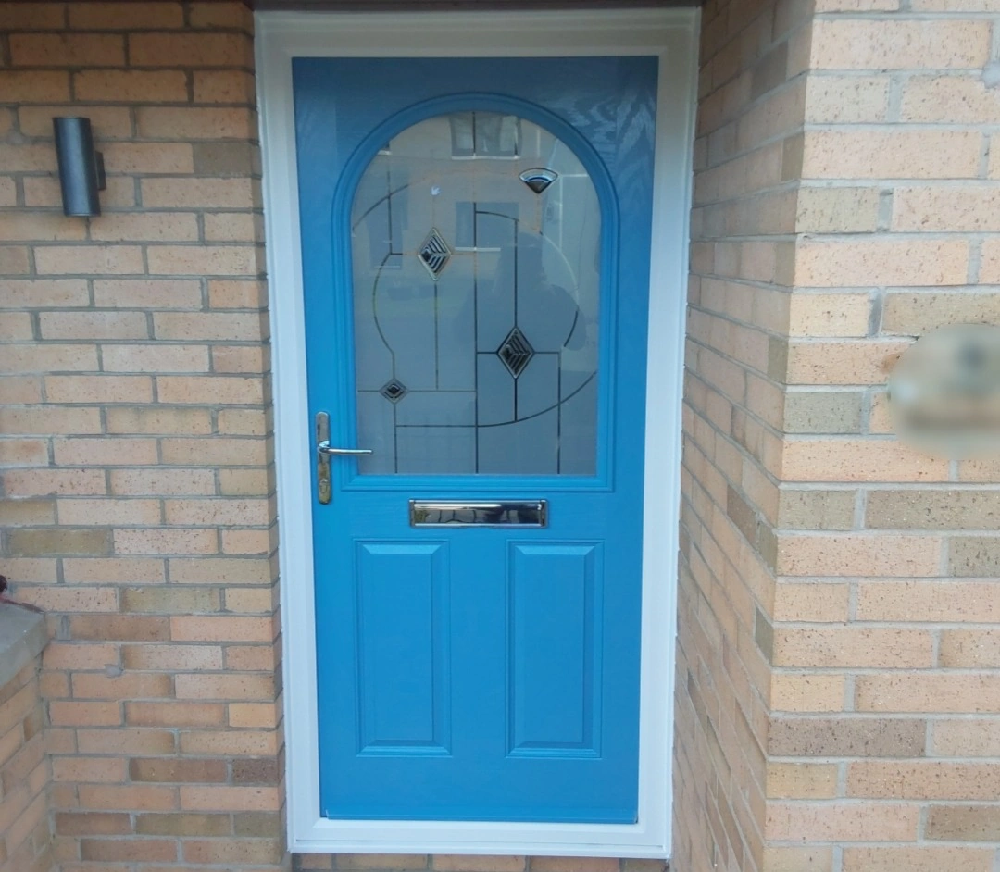
A composite door is engineered from several materials pressed and bonded together under high pressure — hence the name. While construction varies between manufacturers, a typical composite door consists of:
- A solid insulating core — either high-density polyurethane foam or engineered solid timber, providing thermal insulation and structural strength
- A GRP outer skin (glass-reinforced plastic, the same material used in boat hulls) that is impact-resistant, through-coloured and moulded with an authentic woodgrain texture
- A reinforced sub-frame, usually uPVC or timber, for rigidity and weather sealing
- A toughened or laminated glazing unit where glass is included
The result is a thicker, denser, more rigid slab — usually 44mm or more, compared to the 28mm panels in many standard uPVC doors. That extra mass is what gives composite doors their premium feel: they close with a reassuring, solid “thud” rather than a hollow click.
The GRP skin is also the secret behind their famous kerb appeal. Because the colour runs right through the material and the woodgrain is moulded from real timber, a composite door looks remarkably like a freshly painted wooden door — but it will never need sanding or repainting in its life.
uPVC vs Composite Doors at a Glance
Before we dig into the detail, here’s how the two compare across the factors that matter most:
| Feature | uPVC Door | Composite Door |
|---|---|---|
| Starting price (fitted) | From £1,000 | From £1,500 |
| Door thickness | ~28mm panel | ~44mm+ solid slab |
| Energy efficiency | Good (insulated core) | Excellent (denser, thicker core) |
| Security | Multi-point locking, PAS 24 options | Multi-point locking plus solid, impact-resistant slab |
| Noise reduction | Good | Excellent (denser construction) |
| Lifespan | 20–25 years | 30+ years |
| Maintenance | Wipe clean only | Wipe clean only |
| Appearance | Smooth or foiled finishes | Authentic woodgrain timber look |
| Best for | Budget-conscious upgrades, back doors, rentals | Front doors, kerb appeal, maximum performance |
Cost: How Do uPVC and Composite Doors Compare?
Price is usually the deciding factor in the uPVC doors vs composite doors debate, so let’s be upfront. Our current starting prices for a professionally fitted door are from £1,000 for uPVC and from £1,500 for composite. The final figure for either depends on the size, style, glazing design, hardware upgrades (such as premium handles or smart locks) and colour you choose. Here’s how those starting prices compare by door type:
| Door type | uPVC (supplied & fitted) | Composite (supplied & fitted) |
|---|---|---|
| Standard front door | From £1,000 | From £1,500 |
| Front door with decorative glazing | From £1,200 | From £1,700 |
| Custom colour | From £1,200 | From £1,700 |
| Premium design and hardware | From £1,400 | From £2,000 |
That makes uPVC the lower-starting-price option, which is why it remains a practical choice for back doors, side doors, porches and rental properties where function and budget matter.
However, it’s worth thinking about lifetime value rather than just the starting price. A composite door’s longer lifespan, better insulation and stronger kerb appeal can make it the better investment over the decades — particularly on a front door, where first impressions genuinely influence how buyers perceive a property’s value. And whatever you decide, our Price Match Promise means we’ll match any like-for-like quote from a reputable competitor, and our free quote comparison service helps you check you’re getting a fair deal.
Energy Efficiency: Which Door Keeps More Heat In?
Your front door is one of the biggest sources of draughts and heat loss in an older home — and in a Scottish winter, that matters. According to the Energy Saving Trust, modern external doors with effective draught-proofing seals and insulated cores measurably reduce heat loss, lower energy bills and improve comfort. Both uPVC and composite doors offer exactly this kind of construction, so either is a major upgrade on an ageing timber door.
Composite doors do hold a slight edge, thanks to their thicker, denser cores. Door thermal performance is measured in U-values — the lower the number, the less heat escapes. A quality composite door can achieve a U-value as low as around 1.0–1.4 W/m²K, while a good insulated uPVC door typically sits a little higher. In everyday terms, both will transform a draughty entrance hall; composite simply squeezes out a little extra performance.
When comparing specific models, ask for the door’s U-value or energy rating. The British Fenestration Rating Council (BFRC) runs the UK’s independent energy-rating scheme for windows and glazed doors, which makes genuine like-for-like comparison straightforward. And if you want to maximise the benefit, pairing your new door with energy-efficient double or triple glazed windows is the single most effective way to lift your whole home’s thermal performance.
Security: Which Door Keeps Your Home Safest?
Your front door is your home’s first line of defence, and this is an area where construction really counts. Both door types are available with modern security hardware — multi-point locking systems that secure the door at several points along the frame, anti-snap and anti-pick lock cylinders (look for TS 007 3-star rated cylinders), and reinforced hinges and hook bolts.
Where composite doors pull ahead is the slab itself. A solid, high-density 44mm core wrapped in a GRP skin is significantly harder to force, kick in, or cut through than a thinner uPVC panel. That inherent strength is why composite doors are so frequently recommended for front doors, and why many police and insurance-approved door ranges are composite.
Whatever material you choose, the standards matter more than the marketing. Look for doors tested to PAS 24 — the UK enhanced security standard for doorsets referenced in Approved Document Q of the Building Regulations — which subjects the entire doorset (frame, locks, hinges and glazing) to simulated attack tests. Our uPVC doors can be specified with PAS 24 security; ask us to confirm the certification for the exact doorset you are considering. We are a Secured by Design member, but membership does not mean that every door we supply is Secured by Design accredited. If that accreditation matters to you, ask for product-specific evidence rather than relying on the company membership alone.
One final point that’s often overlooked: even the strongest door is only as secure as its installation. A poorly fitted door with gaps in the frame undermines the best hardware — which is why professional installation by an experienced, accredited team matters just as much as the door you pick.
Durability, Lifespan and Maintenance
Here’s some good news: neither door will ever rot, warp, swell or need painting — a major win over timber in the wet Scottish climate, where rain and temperature swings punish traditional wooden doors. Maintenance for both is identical and minimal: an occasional wipe with warm soapy water, plus a drop of lubricant on the hinges, handles and locking mechanism once a year.
Where they differ is longevity. A quality uPVC door will typically serve you well for 20 to 25 years. Over time, the panel skins can show wear, foiled finishes can eventually lift at the edges, and the lighter construction can feel less rigid after decades of daily use. A composite door’s solid core and tough through-coloured GRP skin push its expected lifespan to 30 years or more. That skin is also highly resistant to scratches, dents and UV fading — which is why composite doors tend to look newer for longer on busy family entrances where bikes, prams and school bags take their toll.
Whichever you choose, check the guarantee. Every door we install comes with a 10-year guarantee as standard, giving you complete peace of mind for the decade ahead and beyond.
Noise Reduction
Often forgotten in the comparison is acoustics. If you live on a busy road, near a school or under a flight path, your front door plays a real role in how much outside noise reaches your hallway. Because sound is blocked by mass, the composite door’s denser 44mm slab provides noticeably better sound insulation than a lighter uPVC panel. Combined with quality compression seals — standard on both types — a composite door can make a tangible difference to how peaceful your home feels. For most suburban settings, though, a well-fitted uPVC door with good seals will already be a big improvement on an old, draughty timber door.
Style, Colours and Kerb Appeal
If looks top your priority list, composite doors win on authenticity. The moulded woodgrain texture is virtually indistinguishable from a painted timber door, and the design choice is enormous — from traditional cottage styles with decorative glazing to sleek contemporary designs with long bar handles and minimalist glass. Popular colours range from classic duck-egg blue, Chartwell green and deep red to bold modern anthracite grey and black, all with matching frames and a huge choice of chrome, gold, black or brushed hardware.
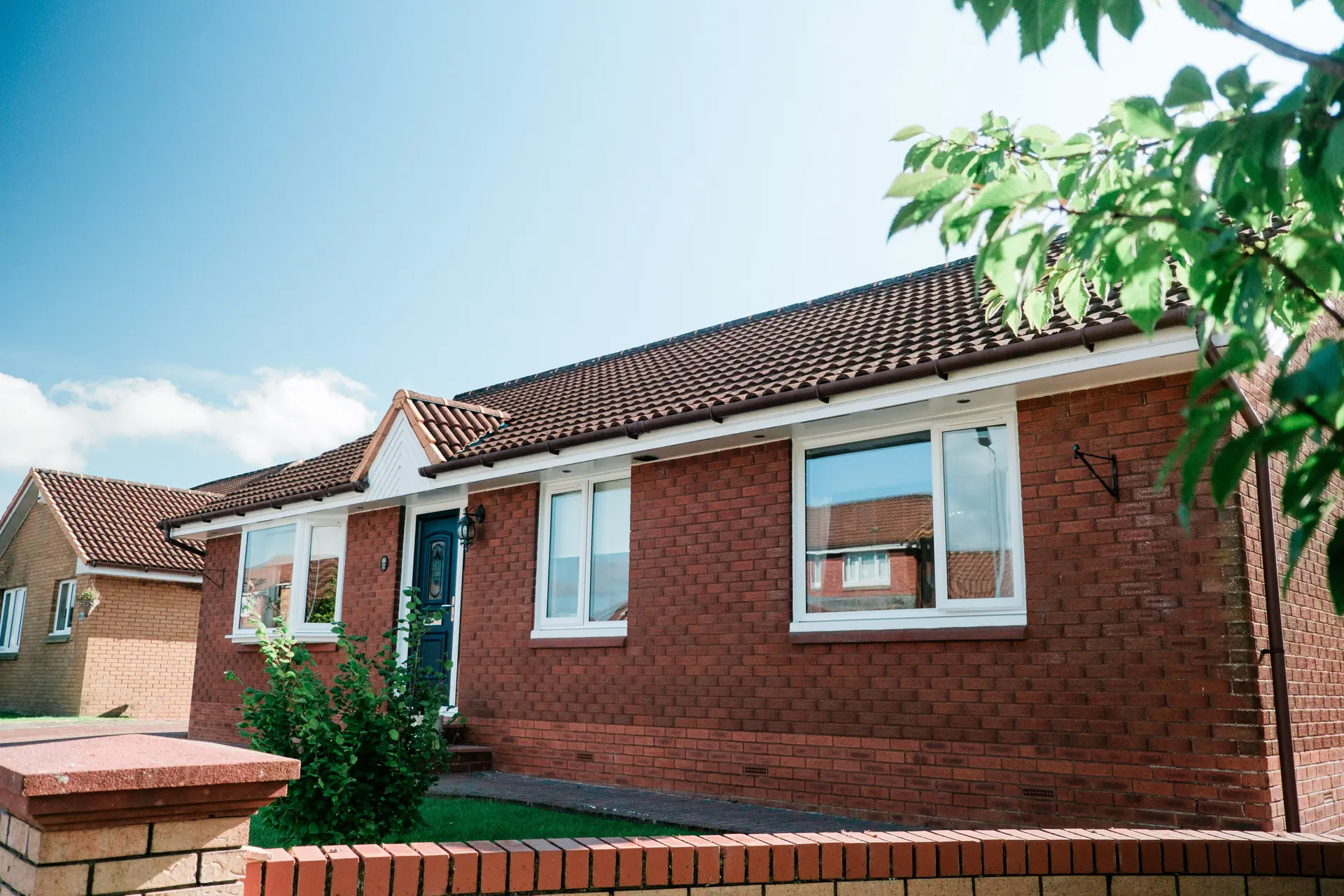
uPVC doors have narrowed the style gap considerably. Smooth and woodgrain-foil finishes now come in popular shades like grey, black, green and Irish oak, and glazing options include everything from simple obscured glass to decorative and bevelled designs. For many homeowners, the smartest approach is coordination: matching a new composite front door with uPVC windows in the same colour transforms a whole façade. Take a look at our Ayrshire anthracite home transformation to see how effective a coordinated look can be — and we also install matching French doors and bifold doors for a seamless finish from front to back.
So, uPVC Doors vs Composite Doors — Which Should You Choose?
Choose a uPVC door if you:
- Want the most cost-effective, reliable upgrade
- Are replacing a back door, side door or porch door
- Are improving a rental property or working to a set budget
- Want solid security and efficiency with minimal spend
- Prefer the widest choice of straightforward, practical styles
Choose a composite door if you:
- Want maximum kerb appeal and an authentic timber look
- Prioritise the highest levels of security and insulation
- Live on a busy road and value superior noise reduction
- Want the longest possible lifespan (30+ years)
- See your front door as a long-term investment in your home’s value
Still torn? A hugely popular approach we see across Scotland is a composite door at the front for kerb appeal and security, with uPVC doors at the back and side where budget matters more — genuinely the best of both worlds. If you’d like a hand weighing it up, our team will talk you through both options with honest advice and a free, no-obligation quote for each.