

If you’re planning a garage conversion in Scotland, you need to understand two separate approval processes: the building warrant and planning permission. They are not the same thing, they are applied for separately, and whether you need one, both, or neither depends on the specifics of your property.
In this guide we will explain each and what your need to know when planning your garage conversion.
This guide is for general information only. Planning rules in Scotland are set nationally but applied locally — always confirm the requirements with your local council before starting work.
Building Warrant vs Planning Permission — What’s the Difference?
- A building warrant is issued by the local council’s Building Standards department. It confirms that the work meets the technical standards set out in the Building (Scotland) Act 2003 — insulation levels, fire safety, structural integrity, ventilation, and electrical safety. It’s about how the building is constructed. Select your council here to apply for a building warrant: www.mygov.scot/building-warrant
- Planning permission is issued by the council’s Planning department. It’s about whether the use or appearance of a building is acceptable in its location — what you’re building and where. You can find you council using the postcode search here: www.gov.uk/search-register-planning-decisions.
As daunting as the application process can seem, our dedicated garage conversion specialists are here to guide you through it. With over a decade of experience helping customers navigate planning permissions and building warrants, they know the requirements inside out and can answer any questions along the way.
| Planning Permission | Building Warrant | |
|---|---|---|
| Issued by | Council Planning department | Council Building Standards department |
| What it covers | Whether the use and appearance is acceptable in its location | Whether the construction meets technical safety and performance standards |
| When needed for a garage conversion | Sometimes — depends on garage type and location | Almost always |
| Document issued at the end | Planning consent | Completion certificate |
| Consequence of skipping it | Enforcement action; planning breach | No completion certificate; problem at point of sale |
Speak to your local garage conversion specialist
Do You Need a Building Warrant for a Garage Conversion in Scotland?
In the vast majority of cases, yes. Converting a garage from a non-habitable space into a room is a change of use, and that change must meet the Scottish Building Standards. A building warrant confirms the work will meet those standards before it starts. A completion certificate confirms it was built to standard once it’s finished.
There is a narrow category of minor works that are exempt from a building warrant in Scotland, but a garage conversion — which involves change of use, insulation, electrics, and structural work — does not fall into that category. Attempting to sell a property with a garage conversion but no completion certificate is a common and expensive problem; solicitors will pick it up and it can hold up or collapse a sale.
How to Apply for a Building Warrant in Scotland
Applications are submitted to your local council’s Building Standards department. The process runs as follows:
- Prepare drawings and a specification — plans showing the existing and proposed layout, and the technical specification (insulation values, window specs, structural details). For a simple conversion, a builder or architectural technician can usually prepare these without a full architect.
- Submit the application — most councils now accept electronic submissions. Include the drawings, a description of works, and payment of the fee.
- Pay the fee — calculated based on the estimated cost of the works. For a typical single garage conversion, the warrant fee is usually between £200 and £500.
- Wait for approval — the council has a statutory target of 20 working days to issue a decision. You cannot start work until the warrant is issued.
- Carry out the work — a Building Standards officer may visit at key stages to inspect progress. Your contractor should factor this into the programme.
- Apply for a completion certificate — once work is done, submit a completion certificate application. An officer will inspect and, if satisfied, issue the certificate. Keep it safe — it will be required when you sell.
Do You Need Planning Permission for a Garage Conversion in Scotland?
This depends on the type of garage and what external changes you’re making.
Attached or Integral Garage — Usually No Planning Permission Required
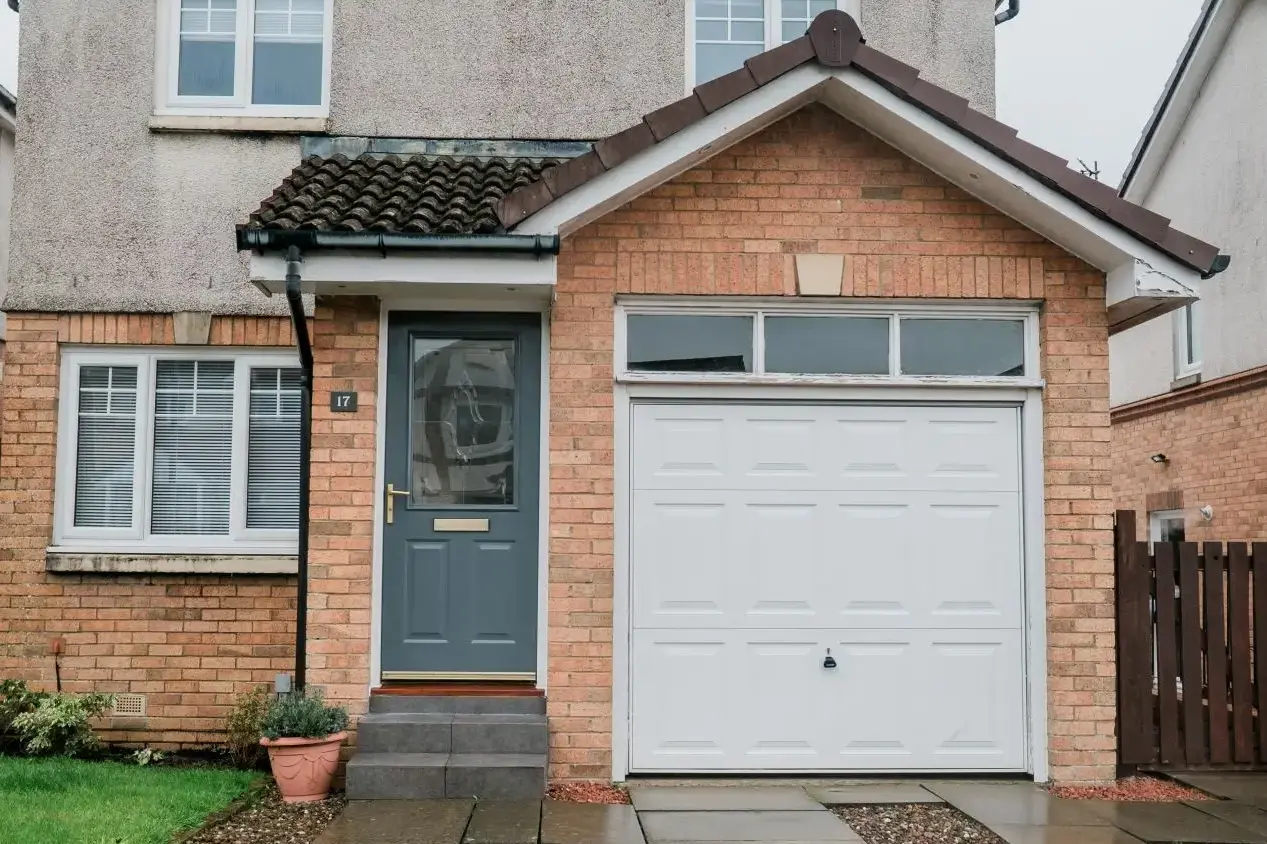
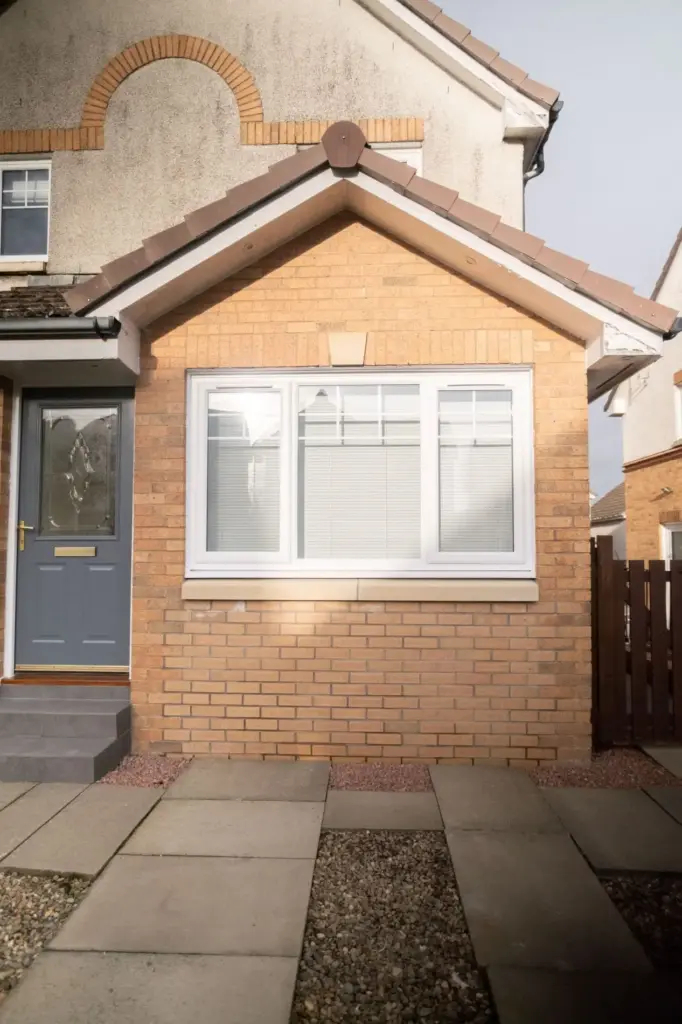
Converting an attached or integral garage typically falls under permitted development in Scotland, meaning no planning application is required — provided you’re not materially altering the external appearance of the building. Internal insulation, new internal walls, and replacing the garage door with a window or doors generally fall within this.
Detached Garage — More Likely to Need Planning Permission
Converting a detached garage into a habitable room — particularly a self-contained space with its own entrance — is more likely to require planning permission. The change of use from ancillary outbuilding to habitable accommodation is a material change, and the external alterations are more visible on a detached structure. If you’re converting a detached garage, confirm the planning position with your local council before commissioning drawings.
Conservation Areas and Article 4 Directions
If your property is in a conservation area, permitted development rights are often restricted or removed entirely. Changes that would normally be straightforward — including replacing a garage door with a window — may require a full planning application. Councils can also remove permitted development rights from specific areas through an Article 4 Direction, which are most commonly found in conservation areas or where the council has chosen to manage development more closely. You can check whether one applies to your property through your local council’s planning portal.
Listed Buildings
Listed buildings require listed building consent for any works that affect their character, regardless of whether planning permission is also needed. If your home is listed, speak to the planning department before doing anything — the rules are more complex and the consequences of getting it wrong are more serious.
Do You Need Both?
For most standard attached garage conversions in Scotland: no planning permission, yes building warrant. The table below covers the most common scenarios.
| Scenario | Planning Permission | Building Warrant |
|---|---|---|
| Attached/integral garage, standard conversion | Usually not required | Almost always required |
| Attached/integral garage, new window or door replacing garage door | Usually not required — check with council | Almost always required |
| Detached garage conversion | Likely required — check with council | Almost always required |
| Conservation area or Article 4 Direction applies | Likely required — check with council | Almost always required |
| Listed building | Listed building consent required | Almost always required |
What Happens If You Convert Without Approval?
Converting a garage without a building warrant — and without the completion certificate that follows — creates a problem that typically surfaces when you sell the property. Your solicitor will ask about any alterations made since the original build. A garage conversion without a completion certificate will be flagged, and in some cases it cannot be retrospectively regularised. Either way, it creates delays, costs, and uncertainty at the worst possible time.
Do the paperwork. It’s not complicated, and the cost is modest relative to the overall project.
Planning a Garage Conversion in Scotland?
At Clyde Windows & Construction, we carry out fully managed garage conversions across Scotland. We handle the complete project from start to finish, with our specialist team supporting you every step of the way.